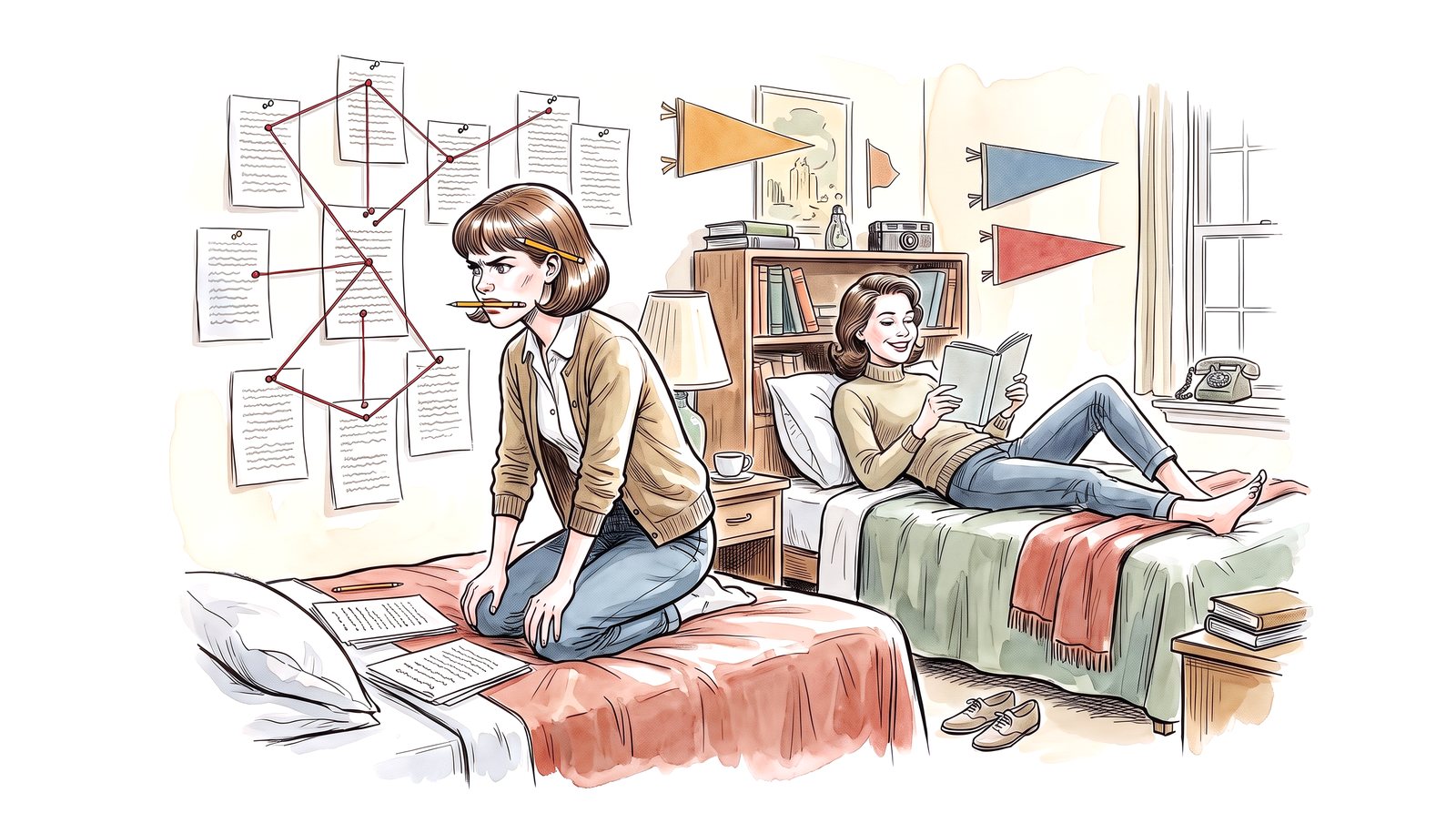
You finished the assigned short story. You know what happened, who the characters are, and what the ending probably means. You might even have something intelligent to say about the symbolism.
You’re ready for class.
Then your professor asks why the author started the story with a woman standing in a grocery store instead of the argument that happened the night before.
You have no idea.
You know what the opening means. You haven’t given much thought to why it’s the opening.
Welcome to your first creative writing workshop.
For most of your academic life, you’ve been taught to read literature for meaning. Identify the themes. Analyze the characters. Explain the symbolism. Those skills still matter, but creative writing classes ask you to look at the decisions that produced the story.
Why this opening? Why this narrator? Why does the argument happen in the kitchen instead of the car? Why does the writer spend half a page describing a coffee mug and barely mention the divorce?
And what would happen if the writer made different choices?
That’s reading like a writer.
First, just read the damn story.
There’s a temptation in creative writing classes to approach every assigned story like you’re preparing evidence for a trial.
You underline sentences. Circle interesting words. Write imagery in the margin whenever someone mentions the weather. By page three, you’ve made so many annotations that you can barely see the actual story.
Congratulations. You’ve successfully prevented yourself from reading it.
Your first pass should be exactly what it sounds like: read the story.
Follow the characters. Get interested in what happens. Notice when you’re confused, bored, surprised, uncomfortable, or curious. Pay attention to the moments that make you want to keep going and the ones that make you consider checking your phone.
You don’t need to explain those reactions yet. In fact, it’s better if you don’t.
When a story surprises you, that’s useful information. When a character makes you uncomfortable, that’s useful too. Even boredom can tell you something about pacing, repetition, or the expectations a writer has established.
But you need to experience those things before you can investigate them.
Let the story work on you first. Then figure out how it did it.
Now go back and figure out how they did it.
You already know what happens. Now you can pay attention to how the story was built.
Start with something you noticed during the first reading.
Maybe you were surprised by the ending. Maybe you disliked a character until halfway through. Maybe a conversation felt unusually tense, even though nobody said anything particularly dramatic.
Find the passage responsible.
Then ask four questions:
- What choice did the writer make?
- Where can I see that choice on the page?
- What effect did it have on me as a reader?
- What might happen if the writer did something differently?
That last question matters more than you might think.
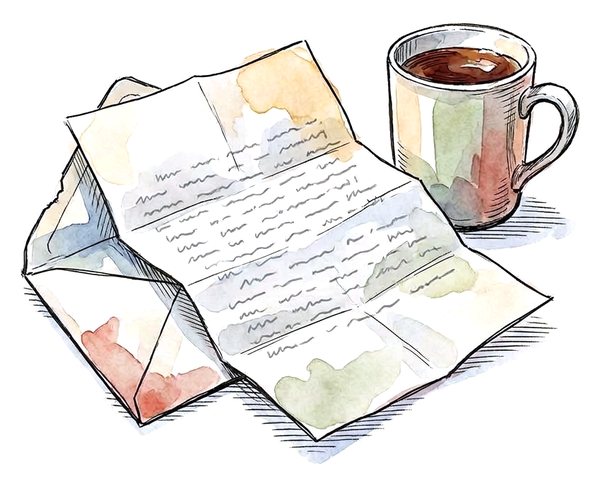
Consider two sentences:
She looked at the letter.
She looked again at the letter.
The second sentence adds one word: again.
Suddenly, the letter has a history. She’s seen it before. Maybe she’s rereading something she doesn’t understand. Maybe she’s hoping the words have changed. Maybe she’s putting off whatever she has to do next.
We don’t know. But we know more than we did.
The writer didn’t need to explain the character’s feelings. One word gave the reader something to infer.
That’s a decision worth noticing, and one you can try in your own writing.
Stop highlighting everything. You’ll learn nothing.
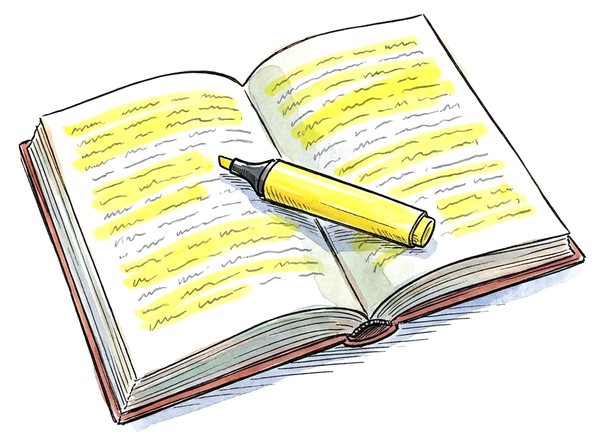
Some students annotate so aggressively that their books look like they survived a highlighter factory explosion.
There’s nothing inherently wrong with marking up a story. The problem is when marking becomes a substitute for thinking.
If every sentence is important, none of them are.
You need a system simple enough that you can use it without constantly interrupting yourself.
Try four marks:
- ? — Something raises a question.
- ! — Something surprises you.
- W — A writing choice worth examining.
- → — Something connects to or causes something else.
That’s enough. You can always write a longer note when something genuinely deserves one.
The trick is to make your annotations specific.
Writing good dialogue beside a conversation isn’t particularly useful. What made it good?
Did one character refuse to answer a question? Did the conversation change direction whenever someone got too close to the truth? Did a character say something ordinary that meant something entirely different because of what happened earlier?
Now you have something to investigate. And when you sit down to write your own dialogue, you have something to try.
Pay attention to the decisions you wouldn’t have made.
When you encounter a choice you wouldn’t have made yourself, resist the urge to decide immediately whether it’s good or bad.
Get curious.
Suppose a story begins after the central argument has already happened.
You might have started with the argument itself. It’s dramatic. There are raised voices, accusations, maybe somebody throwing a plate. Plenty to work with.
Instead, the writer opens the next morning, with two characters eating breakfast in silence.
Why?
Maybe the writer wants the reader to reconstruct the argument from its aftermath. Maybe the silence tells us more about the relationship than the shouting would. Maybe the reader’s uncertainty creates tension that an explicit confrontation would eliminate.
Or maybe the opening doesn’t work.
That’s possible too. Published writers make questionable choices. Your job is to understand what those choices accomplish, whether they succeed, and what alternatives might exist.
There are a few particularly useful places to look.
Openings. Why does the story begin at this moment? What information does the writer give you immediately, and what do you have to wait for?
Point of view. Why are you experiencing the story through this character? What can this narrator know? What are they missing? What would change if someone else told the story?
Dialogue. What are the characters trying to get from each other? What are they refusing to say? How does the conversation change the situation?
Details. Why does the writer describe this object, gesture, or sound? What does it reveal without explaining anything directly?
Structure. Why do events appear in this order? What would happen if the writer revealed a piece of information earlier?
You don’t need to answer every question for every story. Choose one or two decisions that interest you and follow them.
You’ll learn more from understanding one paragraph than from identifying twenty literary devices and calling it a day.
Your professor doesn’t need another plot summary.
Imagine you’re discussing a story in class.
Someone says, “I really liked the ending. It was surprising.”
Fine. That’s a reaction. It’s a perfectly reasonable place to start.
But what is anyone supposed to do with it?
Now imagine the same student says:
“I was surprised by the ending because we don’t learn why she left until the final paragraph. I’m wondering whether revealing that information earlier would change how we interpret her behavior.”
That’s a conversation.
The student has identified a specific choice, explained its effect, and raised a question about an alternative. Someone else can agree. Someone can disagree. The writer can explain what they were trying to accomplish. The class can discuss whether the decision works.
You don’t need an elaborate theory or a vocabulary full of literary terminology to contribute something useful.
You need to point to the page.
This matters even more when you’re discussing another student’s work.
“I didn’t connect with the main character” might be true, but it doesn’t give the writer much direction.
“I had trouble understanding why the main character agreed to help her brother because we haven’t seen anything suggesting she trusts him” gives the writer a problem to consider.
Notice that you haven’t told the writer how to fix it. You’ve identified where your experience as a reader diverged from what the story may have been trying to accomplish.
That’s useful feedback. And learning to give it will make you better at recognizing the same problems in your own drafts.
Steal the technique. Leave the sentences alone.
Writers learn from other writers. They always have.
You can admire a particular sentence, but the more useful question is often how the writer made it work.
Maybe an author creates tension by letting two characters talk about everything except the thing they’re actually upset about.
You can use that.
Maybe a story opens with an ordinary action that takes on a completely different meaning after the ending.
You can try that too.
Maybe the writer gives the reader one important piece of information that the narrator doesn’t know.
There’s another technique worth borrowing.
The point isn’t to reproduce somebody else’s characters, sentences, or scenes. It’s to understand the decisions behind the writing well enough to make your own.
Here’s an exercise.
Find a paragraph in something you’ve written. It doesn’t have to be good. In fact, this might be more interesting if it isn’t.
Now choose one technique you noticed in an assigned story.
Maybe the author uses physical gestures instead of naming emotions. Maybe they withhold information. Maybe they build a scene around a conversation in which neither character says what they mean.
Rewrite your paragraph using that technique.
Don’t worry about whether the new version is better. Compare the two.
What changed? What became clearer? What became less obvious? Did you create tension, lose information, or accidentally make the whole thing ridiculous?
All useful outcomes.
You’ve taken something you learned from reading and put it to work in your own writing. Which is, presumably, why you’re taking a creative writing class in the first place.
The next story you read is also a writing lesson.
For your next assignment, try something simple.
Read the story once without trying to prove how much you know about literature.
Then go back and find one decision the writer made that interests you. Identify the choice. Find the passage. Explain what it accomplishes. Consider what might happen if the writer did something differently.
Bring that observation to class. Better yet, try the technique in something you’re writing.
You don’t need to turn every story into a technical manual. You should still enjoy reading. You should still get lost in a good sentence, care about the characters, and occasionally forget you’re supposed to be learning something.
But once you start noticing how stories are built, you’ll find yourself collecting ideas you can use.
And that’s a pretty good reason to do the reading.