You’ve written a scene. The dialogue sounds natural. The setting is convincing. Your characters have a conversation, move around a little, and occasionally do something with their hands so they aren’t just standing there talking.
Nothing is technically wrong.
Unfortunately, nothing is particularly interesting, either.
You read it again. Maybe the dialogue needs more personality. Maybe the setting needs another detail. Maybe someone should interrupt the conversation, start an argument, or reveal a terrible secret.
Maybe the building should catch fire.
Or maybe you should figure out why the scene is boring before you start committing arson.
Something happening isn’t the same as something mattering
Let’s return to The Good Son, our fictional story about two brothers and their father’s family business.
The younger brother left town years ago, taking his share of the money with him. The older brother stayed, worked weekends, and gradually took over much of the business as their father got older.
Now the younger brother has returned. Their father is delighted. He’s even closing the business early to throw a welcome-home party.
The older brother, who couldn’t get two hours off for his daughter’s birthday, has some feelings about this.
Imagine we’re writing a scene at the party.
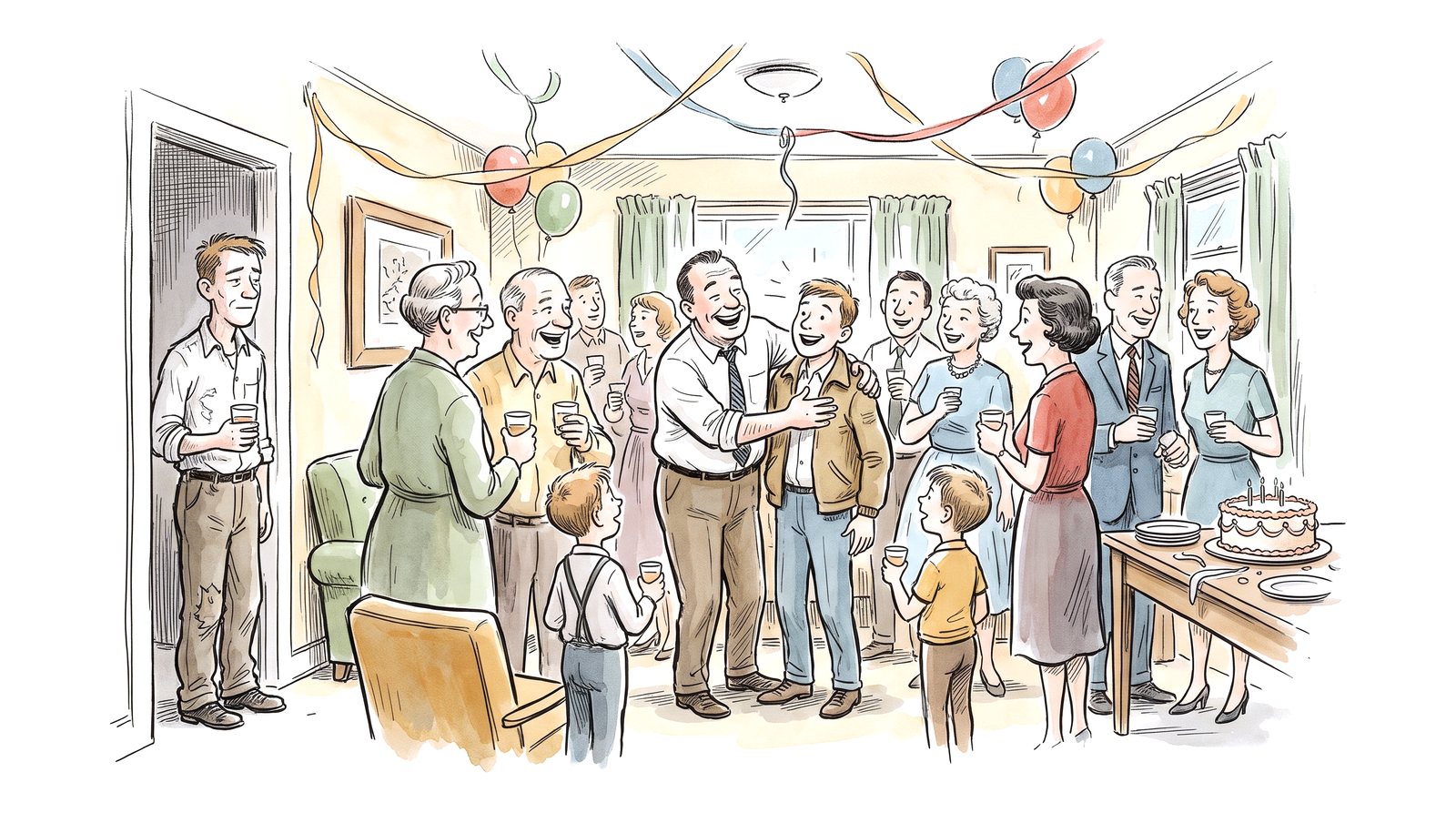
The older brother arrives. His father introduces him to a few guests. Someone asks how business has been. The older brother says it’s been busy. His father mentions that they’re thinking about expanding. They discuss the possibility for a minute.
Then the younger brother walks over, and everyone talks about how good it is to have the family together again.
Perfectly plausible. People have conversations like this at parties all the time.
But why are we reading it?
We’ve established the setting, introduced some people, and communicated a little information. What we haven’t done is give the older brother anything to pursue.
Now imagine he arrives at the party determined to ask his father about taking over the business.
He’s been running it for years. He wants the authority to make decisions without asking permission every time something needs fixing. And he believes he’s finally earned it.
But his father keeps talking about how wonderful it is to have the younger brother home.
Suddenly, the same conversation about expanding the business means something different.
Is the father planning to give the younger brother a role? Does he expect both sons to run it together? Does he even realize the older brother considers himself the obvious successor?
The older brother might still stand there discussing expansion. He might even smile.
But now we’re waiting for something.
That’s the difference between a conversation and a scene with a problem.
Give somebody a reason to want the conversation to go differently
One of the most useful questions you can ask about a boring scene is:
What does the character want before this scene ends?
Not what they want out of life. Not what they secretly needed from their mother when they were seven.
What do they want right now?
Our older brother wants to talk to his father privately about the business.
That’s specific. He can take steps to make it happen.
He might wait for a quiet moment, steer the conversation toward succession, or suggest meeting the next morning.
And his father might keep getting distracted by the party.
That’s an obstacle. Not a particularly impressive one, but it’s enough to begin with.
Then the younger brother joins them.
“Actually,” their father says, “I was just telling your brother about the expansion.”
Now the older brother has a choice. Does he raise the question in front of his brother? Does he wait? Does he ask what his father has already discussed with the son who just came home?
Notice that nobody needs to behave like a villain.
The father might genuinely believe he’s sharing exciting news with both sons. The younger brother might have no interest in returning to the business. The older brother might be making assumptions that aren’t entirely fair.
Good. Let them misunderstand one another.
A scene doesn’t become interesting because somebody is obviously right and somebody else is obviously wrong. It becomes interesting because the characters want things that don’t fit neatly together.
Make the problem cost something
Suppose the older brother wants his father to put him in charge.
Why should we care whether he gets what he wants?
Because we’ve already established what the business represents to him.
He stayed when his brother left. He sacrificed weekends, postponed family obligations, and took on responsibilities nobody formally asked him to assume. He’s built much of his adult identity around being the dependable son.
If his father refuses to give him control, he won’t simply lose a promotion.
He may have to confront the possibility that all those years of sacrifice haven’t earned him what he believed they would.
That’s a much more interesting problem.
And it doesn’t require the business to be on the verge of bankruptcy, the father to have six months to live, or the younger brother to arrive carrying a mysterious briefcase.
Those things could belong in a different story. They don’t automatically improve this one.
Stakes are about what a consequence means to the character, not how spectacular it looks from the outside.
The older brother could lose control of a modest family business, and it might devastate him. Another character could inherit the same business and sell it before lunch.
The difference is the person.
Stop letting everybody off the hook
Here’s another way writers accidentally kill an interesting scene: they resolve the problem before it has a chance to develop.
The older brother finally asks his father about taking over the business.
“Of course,” his father says. “I’ve been meaning to talk to you about that. You’ve earned it.”
They shake hands.
Well, congratulations to everyone.
There might be a good reason to write that scene, but if the question of succession was supposed to create tension, we’ve just eliminated it.
What if his father’s answer is worse than a refusal?
“I thought you were happy with how things are.”
Now the older brother realizes his father doesn’t even recognize there’s a problem.
Or perhaps his father says:
“Let’s talk about it after your brother settles in.”
Now he has reason to wonder whether his father’s plans have changed.
Or perhaps his father says:
“I’ve been hoping you’d take some time off. You’ve worked hard enough.”
That might be a loving gesture. It might also be the last thing the older brother wants to hear.
Each response changes what he understands about the situation and what he might do next.
He could explain himself, confront his father, withdraw from the conversation, or make a decision he’ll regret.
And each choice can create another problem.
That’s escalation. Not a series of increasingly improbable disasters, but a chain of consequences that grows from what the characters want and how they behave.
You don’t have to make the situation louder. You have to make it harder to ignore.
The six-question boring-scene test
Before you throw away a scene or introduce a suspicious stranger with a gun, try diagnosing what’s actually missing.
1. Does anyone want something specific?
Our older brother wants his father to put him in charge. That’s something he can actively pursue. If your character is merely present while other people talk, give them a reason to participate.
2. Is something making that difficult?
His father doesn’t recognize the urgency, and his younger brother’s return complicates the conversation. An obstacle doesn’t have to be an enemy. Sometimes it’s another person’s perfectly reasonable priorities.
3. Do we understand why it matters?
The business represents years of work and sacrifice. If readers don’t understand what success or failure means to the character, the conflict may feel like a minor inconvenience.
4. Does the problem change?
The older brother begins by wanting recognition. He might discover that his father has different plans for the business. Now he must decide whether to challenge those plans or accept them. The problem has developed.
5. Is anything different at the end?
Maybe he learns something about his father’s intentions. Maybe he says something he can’t take back. Maybe he decides to leave the business. A scene doesn’t need a dramatic ending, but it should usually change what someone knows, believes, wants, or can do.
6. Would the story lose anything if you cut it?
This is the unpleasant one.
Suppose our party scene introduces no new information, reveals nothing important about the brothers, changes no relationships, and influences no decisions. We already know the younger brother is home and their father is happy about it.
Do we need the scene?
Maybe not.
Sometimes the best way to improve a boring scene is to remove it.
Yes, even if it contains a joke you really like.
You can save the joke.
Try this before you rewrite
Exercise: the 3-sentence scene audit
Before rewriting a scene that isn’t working, force yourself to finish three sentences:
- The character wants: One specific thing they hope to accomplish during this scene.
- The problem is: What’s actively preventing them from getting it.
- By the end: What changes in what someone knows, believes, wants, or can do.
Now revise 200–300 words without introducing new characters, sudden emergencies, or dramatic revelations.
Work with what’s already in the room.
Then compare the original and revised versions. Does the revision give readers a better reason to care what happens next?
If it doesn’t, consider starting the scene later, ending it earlier, or cutting it altogether.
Not every conversation your characters have deserves an audience.
You don’t need to burn down the building
Our older brother doesn’t need a fistfight at the party. He doesn’t need to discover that his father has secretly sold the business. He doesn’t need his younger brother to announce that he’s been living under an assumed identity.
He needs something to want, something standing in the way, and a reason the outcome matters to him.
Once readers understand those things, a conversation about expanding a family business can become a confrontation over years of sacrifice, loyalty, and resentment.
Nobody has to raise their voice.
And the building can remain fully insured.