Character questionnaires will ask what your protagonist eats for breakfast, what music they listen to when they’re sad, and what’s rotting in their refrigerator.
You can spend three weeks answering every question. You can create a fictional person with a more thoroughly documented life than your own, complete with childhood memories, old grudges, and an explanation for why they haven’t spoken to their college roommate in eleven years.
Then you sit down to write your story, and nothing happens.
The problem isn’t that you’ve wasted your time. Some of that information might become useful. The problem is that you’ve mistaken knowing a character for knowing what to do with one.
Readers don’t need your character’s complete biography. They need to see what happens when that character wants something, encounters resistance, and has to decide what to do about it.
Let’s give somebody a problem.
Meet the good son
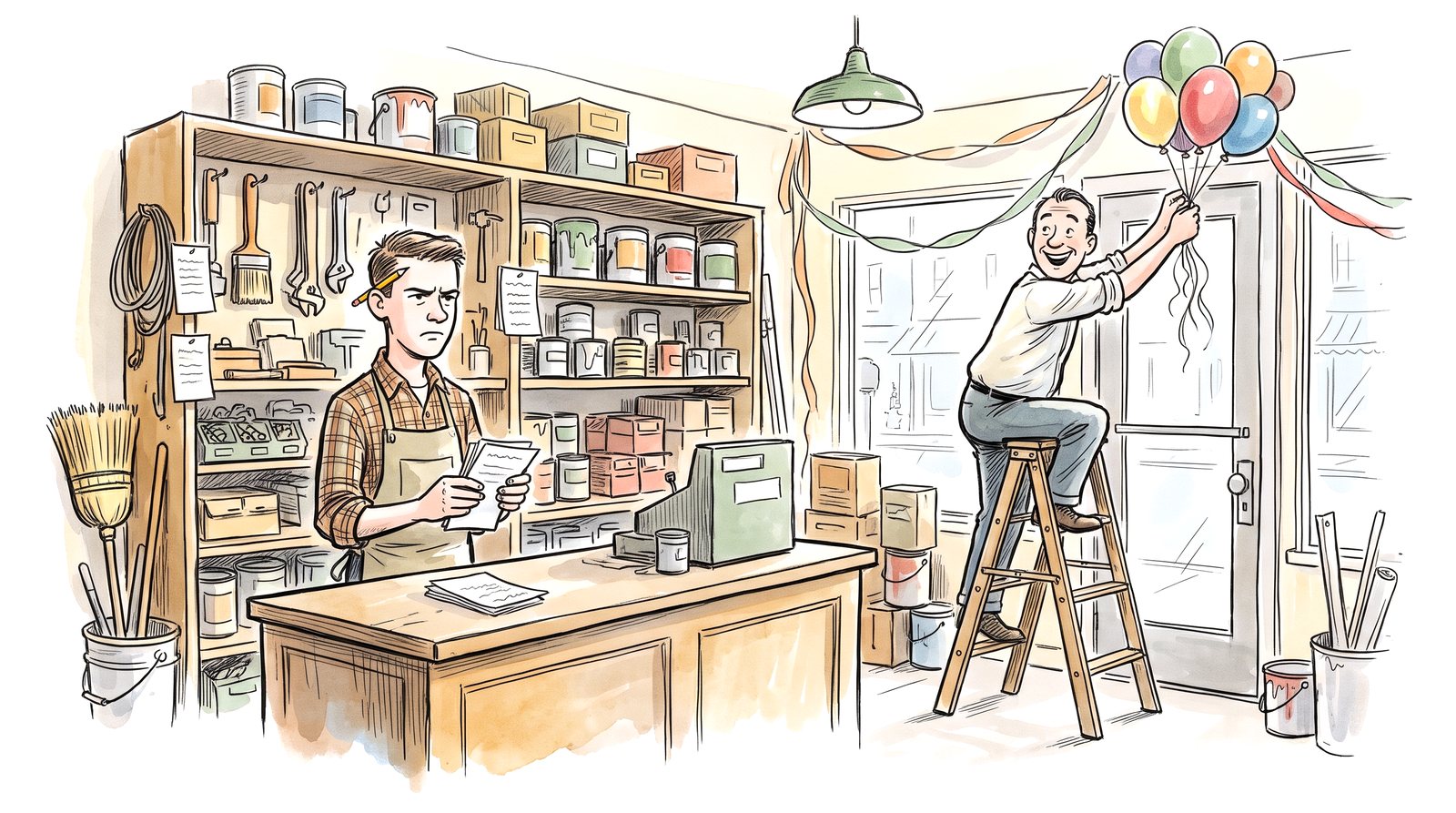
Imagine two brothers whose father owns a small family business.
The younger brother left town years ago, taking his share of the business’s money with him. He wanted a different life, and he went looking for one.
The older brother stayed. He worked weekends, took on responsibilities his younger brother left behind, and helped keep the business running, even when doing so meant putting other parts of his life on hold.
He’s dependable, hardworking, and loyal. A good son.
Now the younger brother is coming home.
Their father is delighted. So delighted, in fact, that he announces they’re closing the business early to throw a welcome-home party.
The older brother has spent years showing up for work. His younger brother shows up for a party.
We have the beginnings of a story. We know what the older brother has done, and we can probably guess how he feels. What we don’t know is what he wants.
And that question changes everything.
Give him something to want
Maybe the older brother wants his father’s recognition.
He’s spent years doing what was expected of him. He doesn’t need a parade, but he’d appreciate some acknowledgment that keeping the business afloat required more than remembering to unlock the front door.
Or maybe he wants control of the business. He’s been running things long enough to believe he’s earned the right to make decisions, and his brother’s return threatens an arrangement he thought was settled.
Perhaps he wants his family to be close again. He misses his brother and wants to enjoy the reunion, but he can’t shake the feeling that his father values the son who left more than the one who stayed.
These possibilities create different versions of the older brother. One sees the party as an insult. Another sees a threat. A third sees an opportunity for reconciliation that he’s afraid will end in disappointment.
They could have identical childhoods, jobs, and histories with their father. Their desires would still lead them to experience the same event differently.
A father closing his business early isn’t inherently dramatic. Plenty of businesses close early. Sometimes there’s a plumbing problem. Sometimes it’s somebody’s birthday.
But for a son who’s spent years trying to earn his father’s approval, that announcement might feel like a verdict on his entire adult life.
That’s what a character’s desire gives you: a reason for an ordinary event to become the beginning of a problem.
Make his best quality part of the problem
The older brother is responsible. That’s a good quality. Businesses need responsible people, and families generally appreciate them, too.
But responsibility can become something less admirable when a person starts treating every sacrifice as a debt somebody else owes them.
Maybe he doesn’t simply want recognition. Maybe he believes he’s entitled to it.
He remembers every Saturday he worked, every vacation he postponed, and every time he stayed late because somebody needed him. He also remembers that his younger brother didn’t.
He may even have a point. That doesn’t mean his behavior will always be reasonable.
Perhaps he’s become controlling because he doesn’t trust anyone else to handle things properly. Perhaps he resents his brother for escaping obligations he secretly wishes he’d escaped himself. Perhaps he uses his reliability to make other people feel guilty.
His resentment may have grown directly out of the quality that made him so dependable.
Our older brother doesn’t have to be wrong about his family to behave badly toward them. In fact, the more convinced he is that he’s doing the right thing, the more trouble he might cause.
Stop telling us he’s resentful
Let’s return to the father’s announcement. The younger brother is coming home, the business is closing early, and there’s going to be a party.
You could write:
The older brother was furious. He’d sacrificed years of his life for the business, and now his father was celebrating the son who’d abandoned them.
That’s clear, and sometimes direct narration is exactly what a story needs. But if this is an important moment, you have an opportunity to reveal more about the older brother by letting him respond.
Consider three possibilities.
Response one:
“That’s great,” the older brother said.
His father smiled. “I knew you’d be happy.”
“Of course.”
He looked at the orders stacked beside the register.
“Who’s going to finish these?”
Response two:
“We’re closing early?”
“Just for the afternoon,” his father said.
The older brother nodded.
“Funny. I asked to close early for my anniversary last year.”
His father stopped smiling.
Response three:
“That’s a wonderful idea,” the older brother said. “I’ll take care of everything.”
He waited until his father had gone into the back office before pulling the business’s financial records from the filing cabinet.
The first brother avoids confrontation, perhaps hoping his father will notice the work without being told. The second wants his father to understand the unfairness immediately. The third appears cooperative, but his behavior suggests he’s thinking several moves ahead.
We’ve kept the family history and the father’s announcement exactly the same. What changes is how the older brother handles disappointment, and each response gives the story somewhere different to go.
The same situation. Three different stories.
A character’s response shouldn’t exist merely to demonstrate their personality. It should affect what happens afterward.
Let’s follow those three versions beyond the father’s announcement.
The dutiful son
He agrees to close early, helps arrange the party, picks up the food, and makes sure there’s enough room for everyone. He tells himself it doesn’t bother him.
But when his father gives a speech about how wonderful it is to have both sons together again, the older brother can’t bring himself to applaud. His younger brother notices and asks what’s wrong.
“Nothing,” the older brother says.
The younger brother doesn’t believe him. He asks again, this time in front of their father. Now the older brother has to tell the truth or keep pretending everything is fine while everyone watches.
His attempt to avoid conflict has created one. This could become a family drama about a man who desperately wants recognition but can’t bring himself to ask for it.
The resentful son
He challenges his father about closing early. The argument begins with unfinished orders but quickly becomes about everything that’s happened over the past several years.
His father accuses him of trying to ruin the reunion. The older brother suggests that if his father is so happy to have his other son back, perhaps he should ask him to start working again.
His father takes the suggestion seriously. By the time the younger brother arrives, there’s already talk of bringing him back into the business.
The older brother has created the very situation he feared. He wanted his father to recognize his contributions, but his anger has threatened his place in the business. Now he must decide whether to welcome his brother or fight him for something neither has been formally promised.
The calculating son
He volunteers to organize the party, welcomes his brother home, and even gives a speech about how much the family has missed him. Privately, though, he’s worried that his father intends to bring the younger brother back into the business.
He starts reviewing the financial records to protect his position and discovers payments he doesn’t recognize. Maybe his father has been helping the younger brother financially. Maybe something is wrong with the business.
Rather than ask, he begins investigating, convinced he’s the only person willing to protect what the family has built.
His desire for control has led him into a situation where his suspicion may do more damage than whatever he eventually discovers. We could be heading into a story about family secrets, manipulation, and a man who believes responsibility gives him the right to know everything.
Each brother begins with the same history and faces the same situation. But their decisions create different problems, which lead to different decisions and still more problems.
That’s how a character starts shaping a story instead of simply occupying one.
Your character doesn’t have to make the right choice
There’s a temptation to treat every story as a lesson in personal improvement. The character begins with a flaw, encounters difficulties, learns something important, and becomes a better person.
That’s one possibility, but characters can also refuse to change. They can misunderstand what they’ve experienced or recognize exactly what they’re doing wrong and continue doing it anyway.
Our older brother might finally confront his father and discover that the conversation doesn’t give him the satisfaction he expected. He might reconcile with his younger brother without receiving an apology. Or he might become so consumed with proving he’s the good son that he destroys the relationships he believes he’s protecting.
What matters is whether the ending grows out of the person we’ve been watching.
If he’s spent the entire story avoiding difficult conversations, a sudden, perfectly articulate speech about his emotional needs probably requires some preparation. If he’s been controlling and suspicious, handing over the business to his younger brother should mean something beyond the writer needing a happy ending.
He doesn’t have to become a better person. But the choices he makes, and what those choices cost him, should matter.
Try replacing your protagonist
Here’s a useful test for a story you’re working on.
Choose a scene in which something important happens to your protagonist. Now imagine replacing that character with somebody who wants something different, handles conflict differently, or has a fundamentally different relationship with the other people involved.
Would the scene unfold in essentially the same way?
Suppose our older brother were genuinely happy about his younger brother’s return. He has no interest in taking over the business and has been looking for an opportunity to leave himself.
The father’s announcement might be wonderful news. Instead of an argument, we could have two brothers making plans for the future.
Or suppose the older brother had already decided to quit. The welcome-home party might give him the perfect opportunity to announce it.
If you can replace your protagonist with somebody who has entirely different motivations and nothing about the plot changes, take another look at the decisions you’ve given them. They might be spending too much time watching events happen.
Your protagonist doesn’t have to cause every event. People get fired, cars break down, and relatives show up unexpectedly. Sometimes life makes decisions for us. But how your character responds should influence what happens next.
What do they do when the thing they want becomes harder to get? What are they willing to sacrifice? What do they refuse to admit, and what do they do that makes everything worse?
Those questions will probably tell you more about your story than another twenty pages of character biography.
And if you still want to know what’s in their refrigerator, you can figure that out later.