Your protagonist has had quite a week.
He’s argued with his father, fought with his brother, run into an old girlfriend, uncovered a family secret, and gotten drunk at a bar. He’s also spent a surprising amount of time driving around town thinking about things.
You’ve written 40 pages. People are talking. Emotions are running high. There’s even a fistfight, which seemed like a good idea when you wrote it.
And yet something’s wrong.
You could rearrange half these scenes without changing much. The argument with his father could happen before or after the encounter with his girlfriend. The bar fight could happen on Tuesday instead of Friday. The family secret could come out whenever you need something interesting to happen.
Your characters are busy. Your plot isn’t.
This is irritating because you’ve done what everyone told you to do. You’ve introduced conflict. You’ve made things happen. Unfortunately, making things happen and telling a story aren’t quite the same thing.
More stuff won’t save your story
When a story drags, the natural response is to add something. Another problem. An unexpected visitor. A secret. Maybe somebody should die. Death is certainly one way to get everyone’s attention.
But an interesting event doesn’t automatically make an interesting plot. A character can experience a dozen dramatic events without any of them changing the direction of the story.
Think about the difference between a sequence of events and a chain of consequences.
In a sequence, your protagonist argues with his brother. Later, he runs into an old girlfriend. The next morning, his father calls with bad news. These might all be compelling scenes individually. But if they don’t affect one another, the story can feel like a collection of anecdotes.
A chain of consequences works differently. Your protagonist argues with his brother and says something he can’t take back. His brother refuses to help with a problem they were supposed to solve together. Forced to handle it alone, your protagonist makes a decision that creates an even bigger problem.
Now try shuffling those scenes. You can’t without breaking something. Which, for once, is exactly what you want.
That’s plot momentum. No explosion or mysterious stranger with a briefcase required.
Give your character one bad decision
Let’s use The Good Son, a fictional short story about two brothers and their father’s family business.
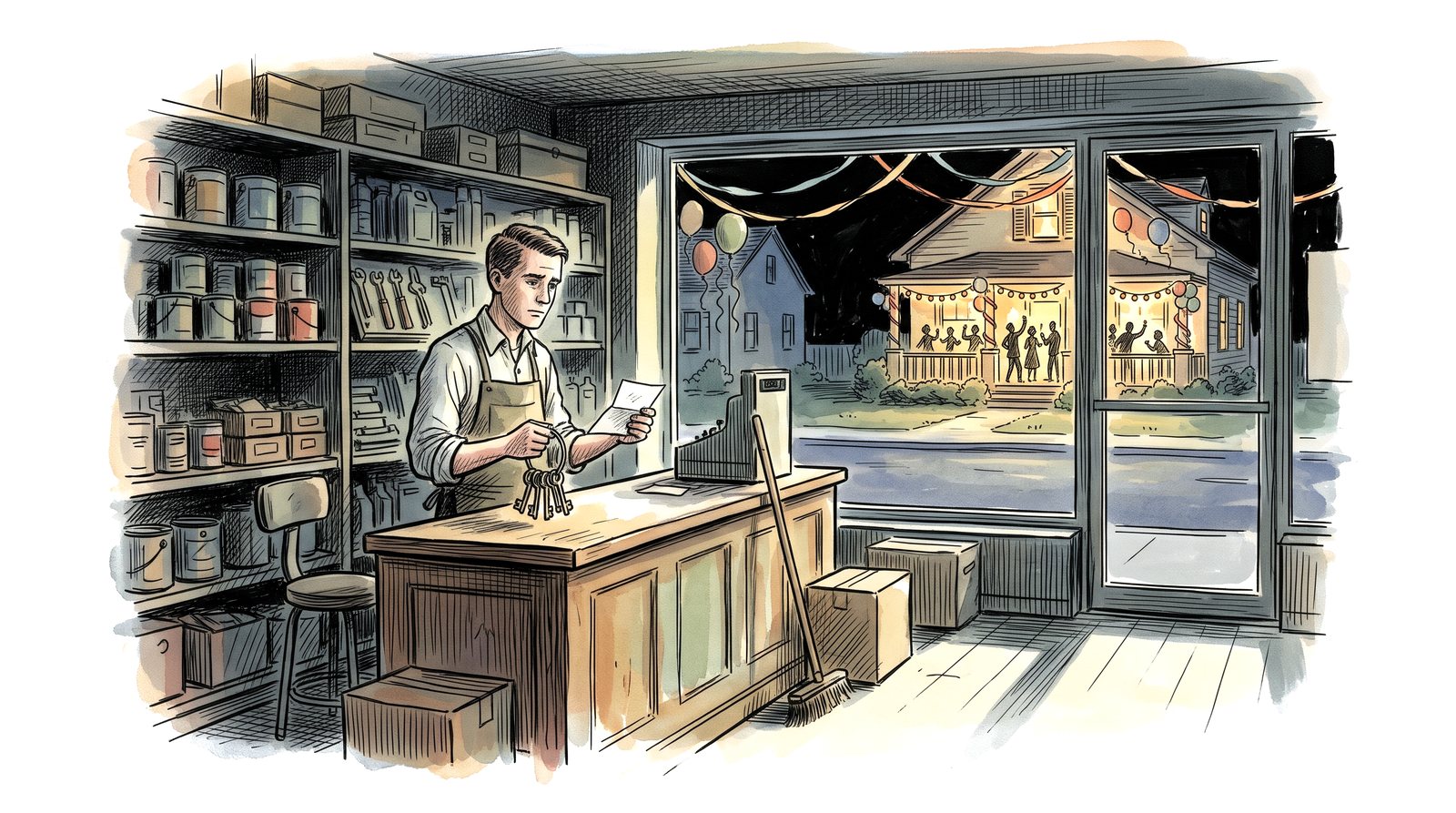
The older brother stayed home. He worked weekends, assumed responsibility, and became the person everyone depended on to keep the business running. The younger brother took his share of the money and left town.
Years later, the younger brother returns. Their father is so delighted that he closes the business early to throw a welcome-home party. The older brother discovers this when he arrives at work.
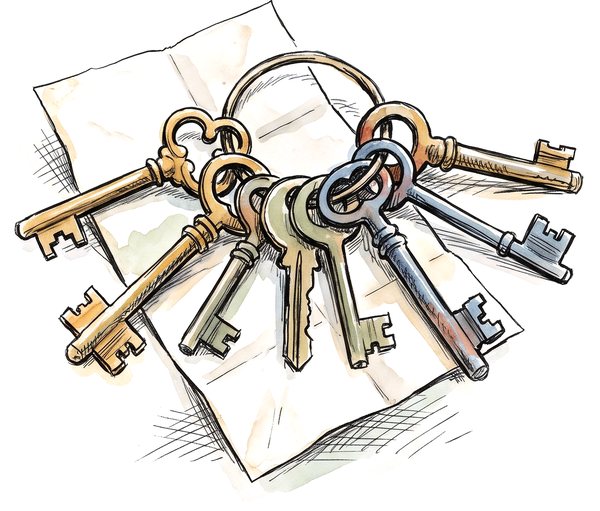
There’s a note waiting for him:
Lock up when you’re finished.
A nice little detail. The younger brother gets the party. The older brother gets the keys.
We could have the older brother attend the party and argue with his father. Then he could go home, drink too much, complain to a friend about how unfair his family has always been, and fight with his brother the next morning.
Plenty of conflict. Possibly some terrific dialogue. But he’s basically taking his resentment on a tour of the local establishments.
So let’s give him a decision.
He reads the note and walks out without locking up. For once, he refuses to be the responsible one. The next morning, the first employee arrives to find the door open and calls his father. His father demands to know what happened.
The older brother could admit that he left deliberately. Instead, ashamed of how petty his rebellion looks in daylight, he claims he thought somebody else was closing.
His father now suspects an employee made a mistake. The older brother has to choose between letting someone else take the blame and admitting what he did. Meanwhile, his younger brother offers to help sort out the confusion, which makes everything worse.
One decision has created a problem. The lie creates another. Nobody needed to steal anything or crash a car into the building. The consequences came from the character’s resentment and his need to keep looking like the dependable son.
Better still, the older brother can’t solve the problem simply by complaining about his family again. He has to do something.
Every scene should leave something behind
Here’s a useful question to ask after writing a scene: What is different now?
Maybe your protagonist learned something. Maybe a relationship became more complicated. Somebody made a promise they can’t keep, discovered a lie, lost an opportunity, or realized that what they wanted isn’t what they thought it was.
The change might be external: a lost customer, a broken engagement, an unexpected bill. Or it might be internal: a character begins to distrust someone they admired or recognizes an ugly truth about themselves.
Return to The Good Son. Suppose the older brother confronts his father about the welcome-home party. He complains that he’s spent years keeping the business alive while his younger brother gets celebrated for showing up. His father calls him selfish. They argue. The older brother storms out.
Fine. But if he was already resentful and his father already thought he was ungrateful, we’ve spent six pages establishing that neither man is a particularly pleasant dinner companion.
What if his father reveals that he always assumed the older brother wanted to inherit the business? For the first time, the older brother realizes his father has mistaken obligation for ambition.
Or the father says he knows how much his son has sacrificed, but he never asked him to do it.
That’s a different kind of injury.
Either revelation changes how the older brother understands their relationship. He walks into the next scene carrying information he didn’t have before.
This doesn’t mean every scene needs a confession or dramatic reversal. A quiet shift in what someone believes can be enough. But if a scene changes nothing and adds nothing meaningful to our understanding, ask why it’s there.
Try removing a scene
Choose three consecutive scenes from somewhere in the middle of your draft, preferably a stretch you’ve rewritten several times without figuring out why it drags. Describe each in one sentence.
For example:
- Scene 1: The older brother discovers his father has closed the business for the party.
- Scene 2: He visits an old friend and complains about his family.
- Scene 3: He confronts his younger brother at the party.
Now remove Scene 2. Does Scene 3 still happen essentially the same way? Does the older brother arrive with the same information, intentions, and feelings he had when he left Scene 1?
If so, Scene 2 might not be earning its keep. Fortunately, you have options:
- Cut it. Your story doesn’t need every conversation your protagonist has ever had.
- Combine it. Move the important information into a scene that already has a stronger purpose.
- Change it. Perhaps the friend challenges the older brother’s version of events instead of agreeing with him. Now he arrives at the party questioning something he believed.
- Give it a later consequence. Maybe the friend repeats something said in confidence. What seemed like a harmless complaint becomes the reason his father learns how he really feels.
The test isn’t a law. A scene can establish atmosphere, deepen a friendship, or give readers a sense of what a character stands to lose. Those things matter, even if they don’t immediately cause the next event.
The question is whether removing the scene would cost the story something meaningful.
Not every story needs a car chase
All this talk about consequences might sound suspiciously like advice for writing thrillers. Every decision makes things worse, and eventually somebody’s dangling from a helicopter.
Fortunately, your literary short story doesn’t need a helicopter budget.
Let’s take The Good Son in a different, quieter direction. This time, the older brother attends the welcome-home dinner intending to tell his father that he’s tired of running the business and wants to leave.
He rehearses what he’ll say on the drive over. At dinner, his father tells a funny story about the younger brother as a child. Everyone laughs. The older brother smiles politely.
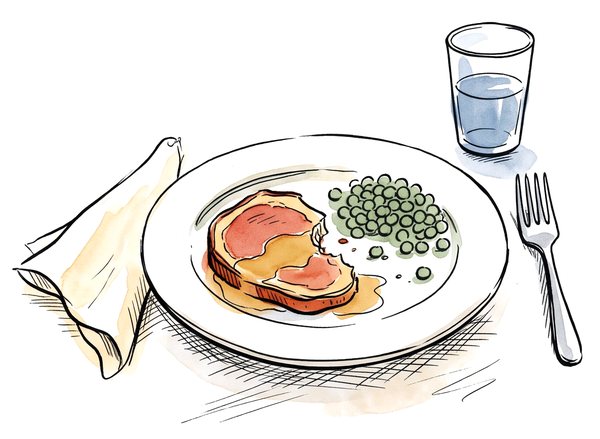
Then his father raises a glass and thanks him for always being the one the family can count on.
The older brother has an opening. He could finally say what he’s thinking. Instead, he says nothing.
After dinner, his father asks him to train the younger brother, who’s thinking about returning to the business. The older brother agrees, though he knows that means postponing his own plans.
That’s the scene. Nobody throws a punch. The most dramatic physical action might be someone putting down a fork.
But the older brother arrived intending to change his life and left having committed himself more deeply to the life he resents. His silence was a decision. Now his father assumes everything is fine, and his brother expects his help.
A person can spend an entire dinner saying almost nothing and still make the worst decision of their life. That’s considerably more interesting than a fistfight that changes nothing.
Before you write another scene
When you reach the middle of a draft and wonder what should happen next, resist the temptation to invent something exciting. Look at what you’ve already written.
What has your protagonist done? What changed because of it? What problem exists now that didn’t exist before? What will they do about that problem?
They might make things better, make them worse, or pretend the problem will resolve itself. A popular strategy, rarely endorsed by the plot.
You can also work backward. If you’ve written a scene you love but can’t figure out where it belongs, ask what decision would make it a natural consequence of what came before.
Sometimes the missing piece isn’t another event. It’s the connection between two events you already have. And sometimes you’ll discover that a scene you spent three days polishing doesn’t belong at all. Annoying, certainly. Better than writing another 40 pages around it.
Your characters don’t need to spend every chapter arguing, fighting, falling in love, or uncovering secrets. They need to do things that matter to what happens next.
Otherwise, they’re just keeping busy.
And so are you.