You’ve done it. You’ve reached the end of your story. The central conflict has come to a head, your character has made a decision, and the final scene delivers exactly what you’ve been building toward.
It’s a good ending.
So naturally, you keep writing.
You add a paragraph explaining what your character has learned. Another about how much they’ve changed. Maybe one more about what the future holds, because apparently the reader needs written confirmation that the character will be okay.
By the time you’re finished, you’ve taken a perfectly good ending and buried it beneath its own explanation.
This happens because endings make writers nervous. You’ve spent an entire story arranging for one moment to matter, and now you’re supposed to trust that the reader will recognize it. What if they miss something? What if they don’t understand the significance of that final decision?
Better explain it. Just to be safe.
Except the reader probably understood the first time. And every paragraph you add afterward risks making the ending a little weaker.
The ending was right there
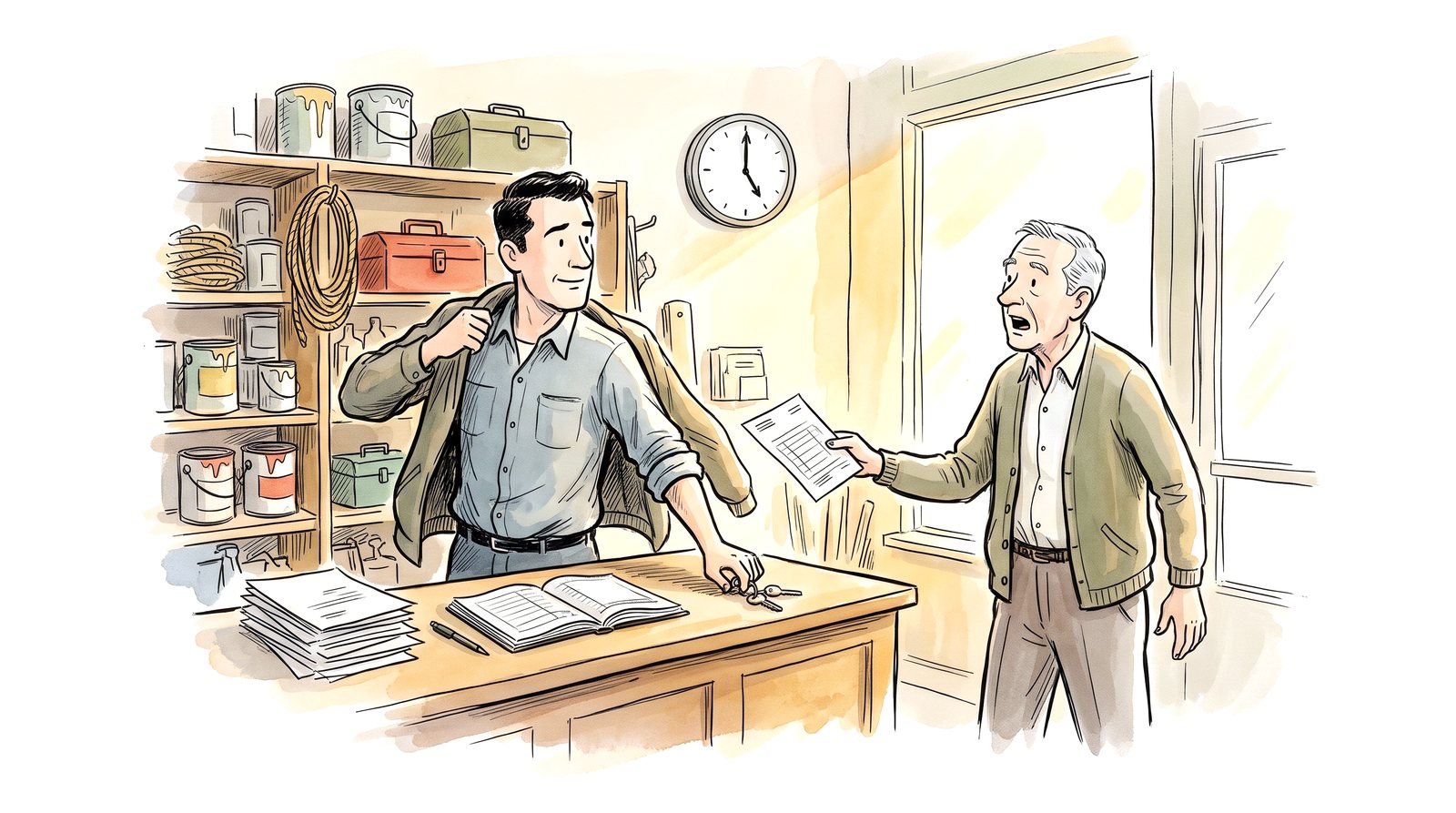
Consider The Good Son, a fictional story about two brothers and their father’s family business. The older brother has spent years keeping the business alive. The younger brother left town, took his share of the money, and built a life elsewhere.
For eleven years, the older brother has opened the shop before sunrise, handled the invoices, covered for absent employees, and stayed late whenever something needed to get done. He’s missed birthdays, school concerts, and enough family dinners that his wife no longer bothers setting a place for him.
His father considers him dependable. His wife has another word for it.
Then his younger brother comes home. Their father closes the business early to celebrate, something he once refused to do for his granddaughter’s birthday. The older brother finally confronts his brother about leaving, only to discover that his brother always thought staying was a choice.
For the first time, the older brother wonders whether he’s spent eleven years fulfilling an obligation nobody actually asked him to accept.
Now imagine the story ends on an ordinary Friday afternoon.
His daughter has a school concert at six. At five, his father asks him to stay and finish an order that could just as easily wait until Monday.
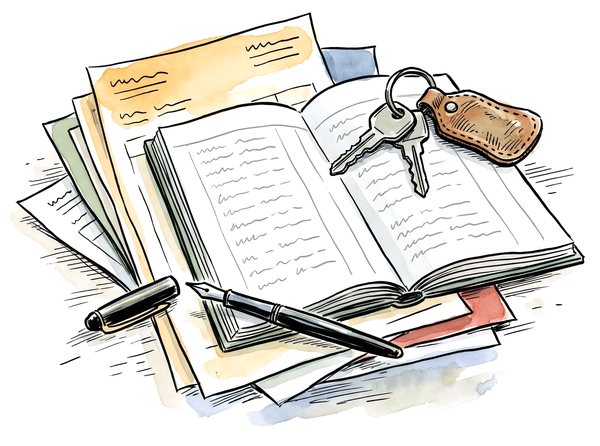
The older brother looks at the unfinished paperwork. He picks up his keys.
“I’ll get it Monday,” he says.
Then he leaves.
Not bad. We’ve spent an entire story watching this man sacrifice his own life for a business that has consumed him. Now, when presented with another opportunity to disappoint his daughter, he makes a different choice.
We know what it means.
Unfortunately, the writer doesn’t believe us.
For the first time in eleven years, he understood that his life belonged to him. He couldn’t spend another decade putting everyone else’s needs ahead of his own.
He realized that his father would never give him the recognition he deserved. It was time to stop waiting for permission to live his life.
As he drove toward the school, he felt something he hadn’t felt in years. Freedom.
There it is. Three paragraphs explaining the ending we just read. The character made a decision, the reader understood it, and then the writer stepped in front of the curtain to narrate the moral.
Those paragraphs don’t deepen the ending. They translate it into a lesson.
There’s a particular kind of final sentence that appears frequently in early fiction drafts:
She finally understood that friendship required honesty.
He knew that some things were more important than success.
For the first time, she realized that home wasn’t a place. It was the people she loved.
These aren’t automatically bad sentences. Reflective endings can work beautifully when they suit the character and the story. But too often, they sound like conclusions to essays written about the fiction rather than endings to the fiction itself.
The writer has decided what the story means and wants to make absolutely certain nobody leaves with a different interpretation.
That’s a shame, because readers are supposed to participate.
When the older brother leaves the shop, some readers will see a man finally standing up to his father. Others will see someone choosing his daughter over his need for approval. Some may think he’s been unfair to his younger brother, blaming him for a life he chose to live.
Those interpretations can coexist. The action is specific enough to be meaningful and complicated enough to invite thought.
A paragraph announcing that he’s finally freed himself from his family’s expectations makes the ending smaller.
The ending has to earn its silence
Of course, those keys only matter because of everything that came before them.
Imagine reading the final scene without knowing anything about the older brother’s history. His father asks him to work late. He says he’ll finish Monday and leaves for his daughter’s concert.
Congratulations. A man has discovered a reasonable work-life balance.
There’s nothing particularly dramatic about that decision without the preceding story. We need to understand that he ordinarily would have stayed, what staying has cost him, and why refusing his father represents a meaningful change.
The ending collects meaning the story has been building.
Suppose an earlier chapter includes his daughter’s recital. He’s sitting in the audience, checking his watch because a delivery is scheduled at the shop. Halfway through her performance, his phone vibrates. An employee can’t find the paperwork for the delivery.
He gets up and leaves.
We don’t need three paragraphs explaining how disappointed his daughter is. Maybe she looks toward the empty seat after the performance. Maybe his wife doesn’t ask where he went because she already knows.
Now the final concert has a history.
When his father asks him to stay late, the reader remembers the recital. The older brother remembers it, too, whether he says so or not. His decision to pick up his keys carries the weight of that earlier failure.
That’s how a writer earns a quiet ending: by giving the final action something specific to answer.
But what if his relationship with his daughter barely appears in the story? What if we’ve never seen him sacrifice anything meaningful for the business? What if he’s already left work early several times without consequence?
Then the ending has a problem. And another paragraph about freedom isn’t going to fix it.
The solution belongs earlier in the draft. Establish the pattern of behavior, show what it costs, and make the final decision a departure from something we’ve actually witnessed.
You can’t explain your way into an ending the story hasn’t earned.
Resolution doesn’t mean everything is fixed
A satisfying ending doesn’t require every problem in a character’s life to disappear.
The older brother still works for his father. The family business still needs someone to manage it. His younger brother hasn’t returned to take over half the responsibilities. Eleven years of resentment won’t vanish because he leaves work early.
His father may even be furious when he returns Monday.
That’s fine.
The story doesn’t need to end with the older brother selling the business, confronting his father in front of the entire family, and moving to Vermont to open a charming little bookstore.
Although, sure, there’s probably a market for that.
What matters is whether something significant has changed in his relationship to the central conflict.
At the beginning, he behaves as though the business has an automatic claim on his time. By the end, he’s willing to challenge that assumption.
He’s made a different choice. That doesn’t guarantee he’ll always make the right one, or that he’s become a completely different person.
When writers explain an ending, they sometimes turn one meaningful decision into a permanent transformation. The character has finally learned to value family. He’s overcome his need for approval. He’s discovered the importance of setting boundaries.
Maybe. But he’s only been out of the shop for thirty seconds.
Give the man a chance to get to the concert before declaring him emotionally healed.
When the extra paragraph belongs
None of this means every story should end on a gesture. Some endings need reflection. Others need aftermath. Sometimes the most interesting moment occurs after the decision we expected to conclude the story.
Return to the older brother leaving the shop. He picks up his keys, tells his father he’ll finish Monday, and walks outside.
Now suppose we continue:
Halfway to the school, he reached for his phone to call the shop. He’d forgotten to tell his father where the spare invoices were kept.
He put the phone back in his pocket.
That additional moment earns its place. The first decision shows that he’s willing to leave. The second reveals how deeply his habits have taken hold. Even after walking out, his first instinct is to make sure the business can function without him.
Putting the phone away becomes another choice.
Or suppose he reaches the school and discovers that the concert started twenty minutes earlier than he thought. He hasn’t missed the entire performance, but he’s missed his daughter’s solo.
Now his decision to leave work doesn’t produce the clean emotional victory we expected. He’s made progress, but it hasn’t erased the consequences of his earlier choices. His daughter may still be disappointed. His wife may still be angry. He may have to accept that changing his behavior doesn’t automatically repair the damage.
That could be a stronger ending for a different version of the story.
Both examples continue beyond the initial departure, but neither simply tells us what the departure means. They introduce new information that changes our understanding of the character or his circumstances.
An additional paragraph might reveal an unexpected consequence, complicate the resolution, or force us to reconsider something we thought we understood.
But if its only purpose is to tell us that the character has grown, found courage, learned a lesson, or finally understood what’s important, there’s a good chance the story has already done that work.
Know when to stop
When revising a story, look closely at the final few paragraphs. Find the last significant action, exchange, or realization. Then read everything that follows.
Does the additional material reveal something new? Does it change how we understand the character’s decision? Does it introduce a consequence that complicates the apparent resolution?
Or does it explain why the moment we just read was important?
If you suspect you’re explaining, try removing the final paragraph. Read the ending again. Then remove another.
You may discover that the story becomes stronger as it gets shorter.
You may also discover that you’ve cut something essential. Maybe the final reflection contains a realization the preceding scene hasn’t earned. Maybe the character’s last action is too ambiguous without additional context. Maybe the story needs another moment before it can stop.
If so, put the material back. Or reconsider what the earlier scenes need to establish.
The goal isn’t to produce the shortest possible ending. It’s to recognize when the story has delivered what it promised.
For The Good Son, that might be the moment the older brother leaves his father’s shop. He hasn’t resolved every family conflict. He hasn’t figured out what the next eleven years will look like. He hasn’t even finished the paperwork.
But his daughter has a concert, and he’s going.