Start Late, Leave Early
A Ten Bad Pages Creative Writing Guide
$7
Where the story really begins, and when it has earned an ending.
Perfectly good sentences on either side of a story can still make the story worse.
Ashley’s alarm goes off at seven. She showers, makes coffee, runs her monologue, changes her shirt twice and walks across campus, and three paragraphs later the story still hasn’t started. Then, once the interesting part is over, everybody explains what happened, discusses what they’ve learned and wanders off to do something that doesn’t concern us.
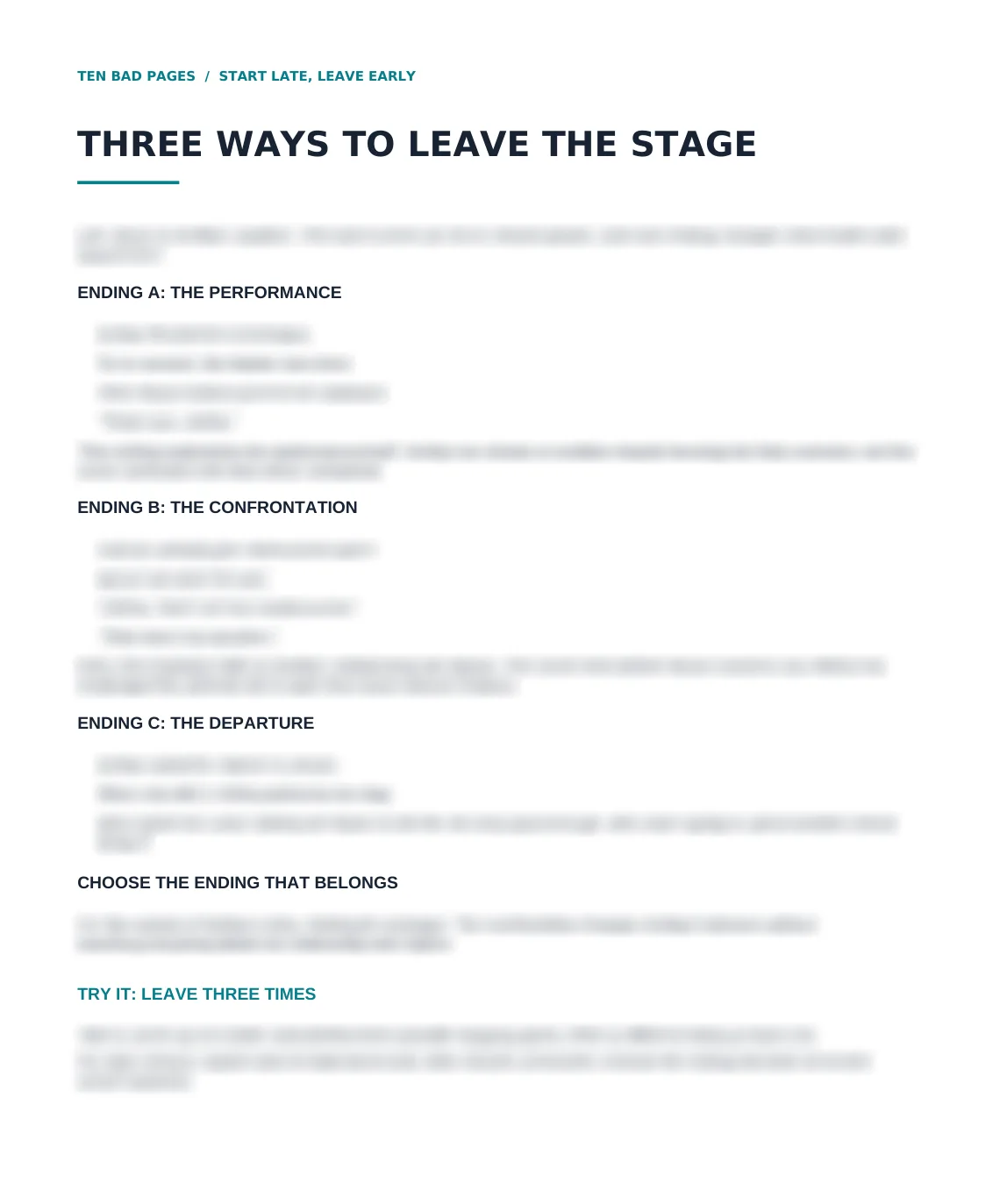
Start Late, Leave Early works from both ends of one college audition. Ashley, a senior, overhears the director say the lead is already decided, then has to walk onstage anyway. You’ll try three openings and three endings for the same scene, see where mystery turns into confusion, and learn to stop when a scene has done its work instead of explaining what it meant.
It works with whatever your professor assigns. Follow your professor’s format, and your professor’s AI policy always wins.
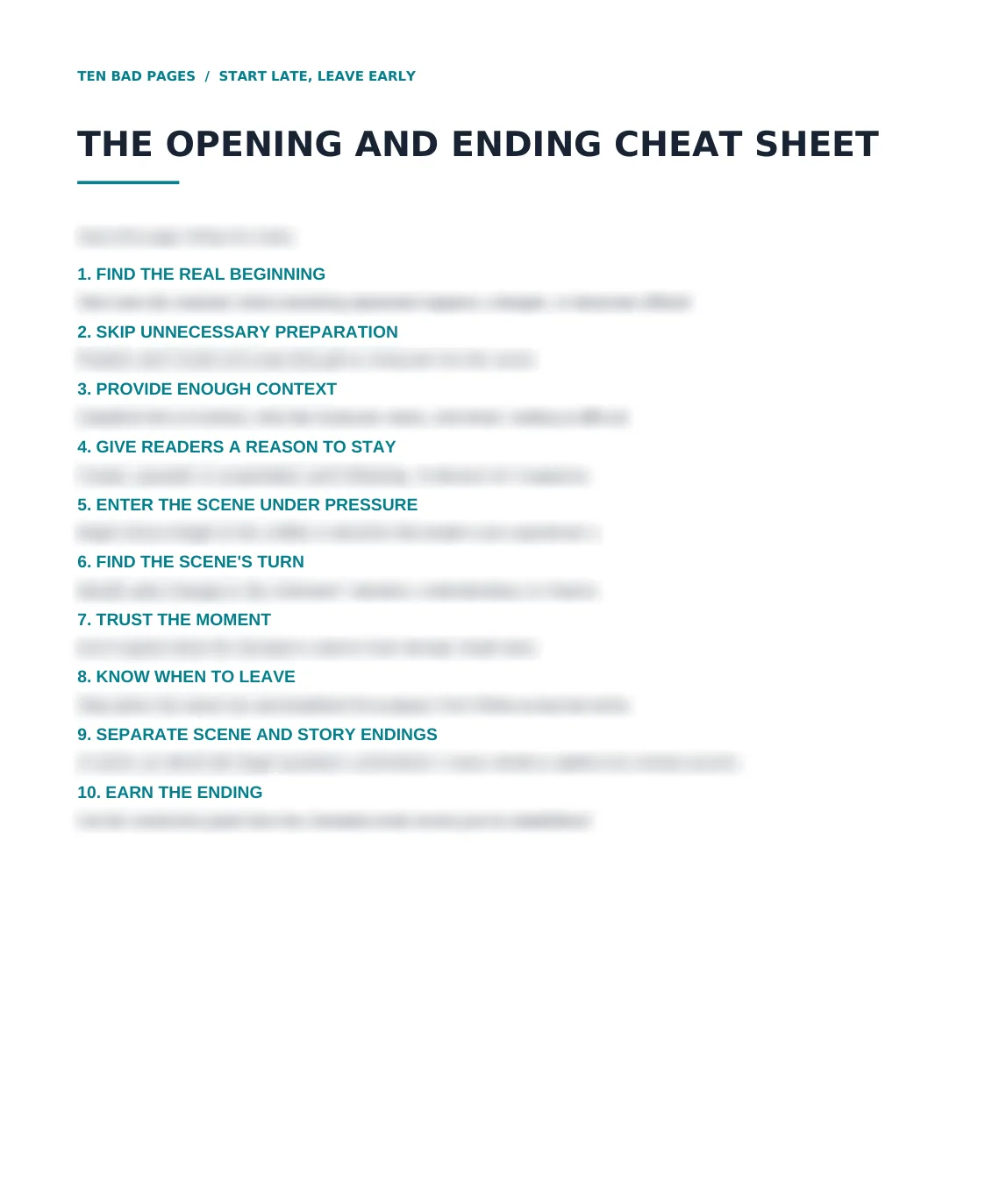
Cut the getting-ready, start near the moment that matters, and keep enough context that nobody gets lost.
The difference between a question worth following and an unexplained envelope.
Find the scene’s turn, stop explaining it, and tell a scene ending from a story ending.
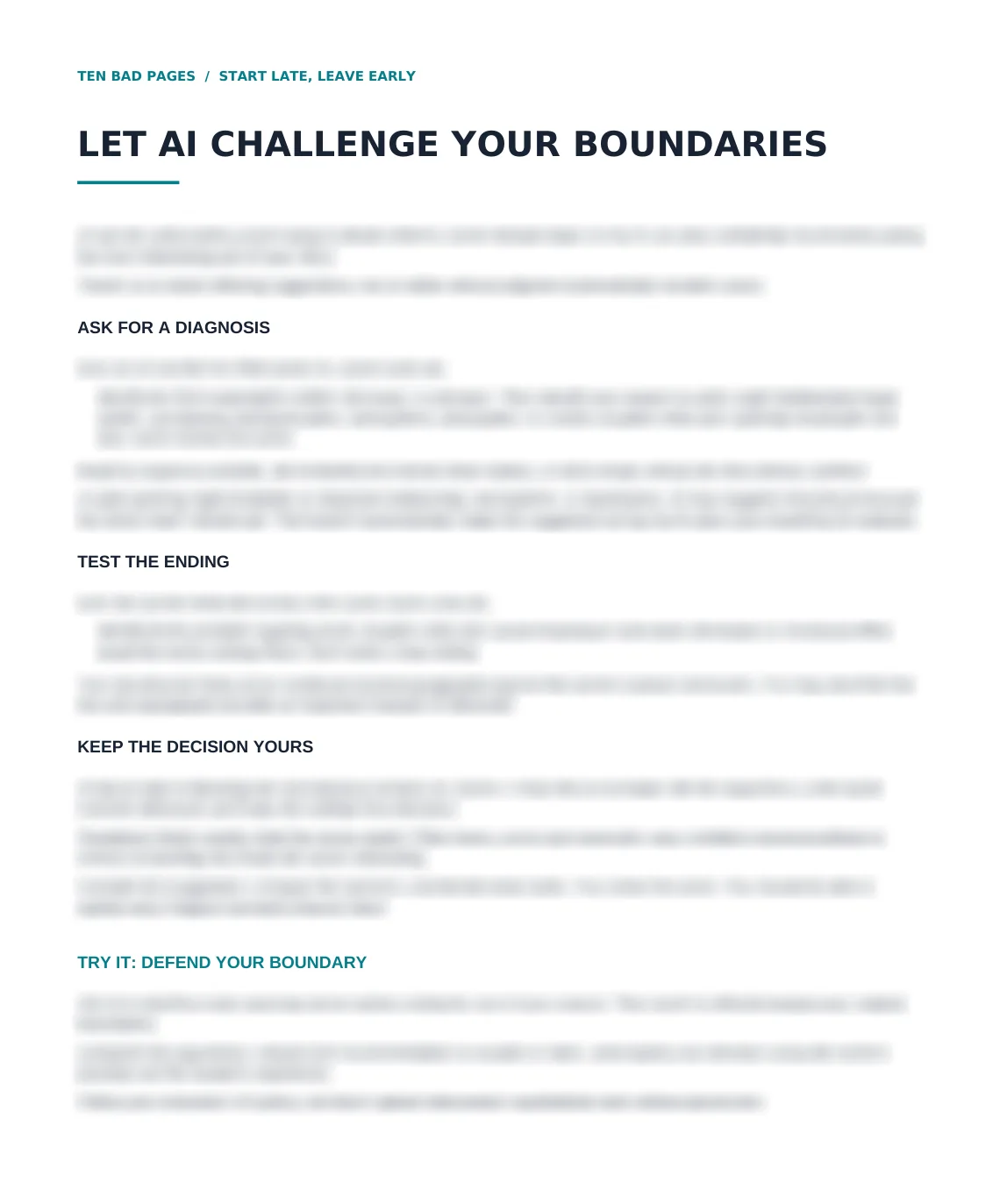
Ask AI where a scene could begin or end, then make the call yourself. Don’t let it write the ending.
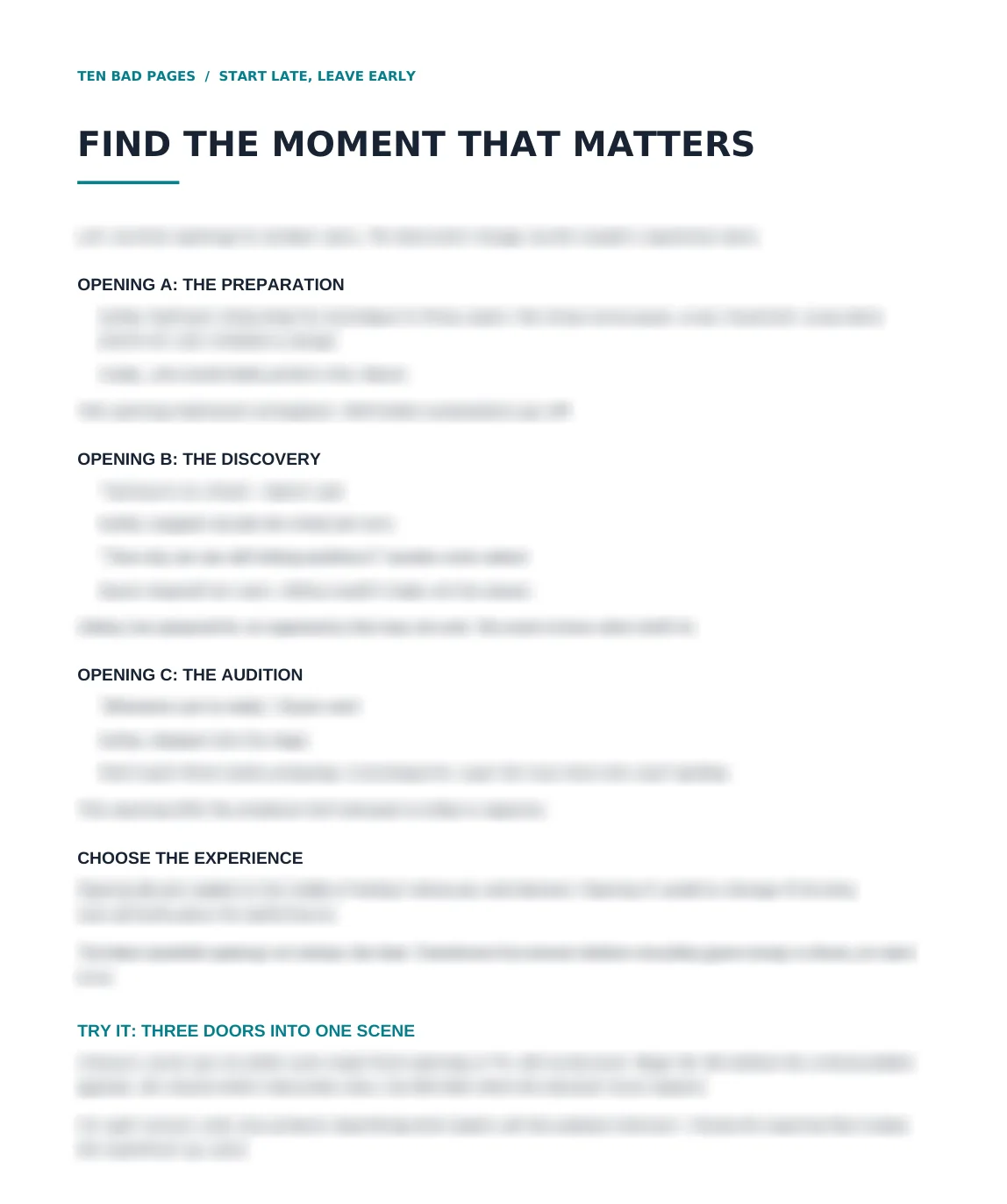
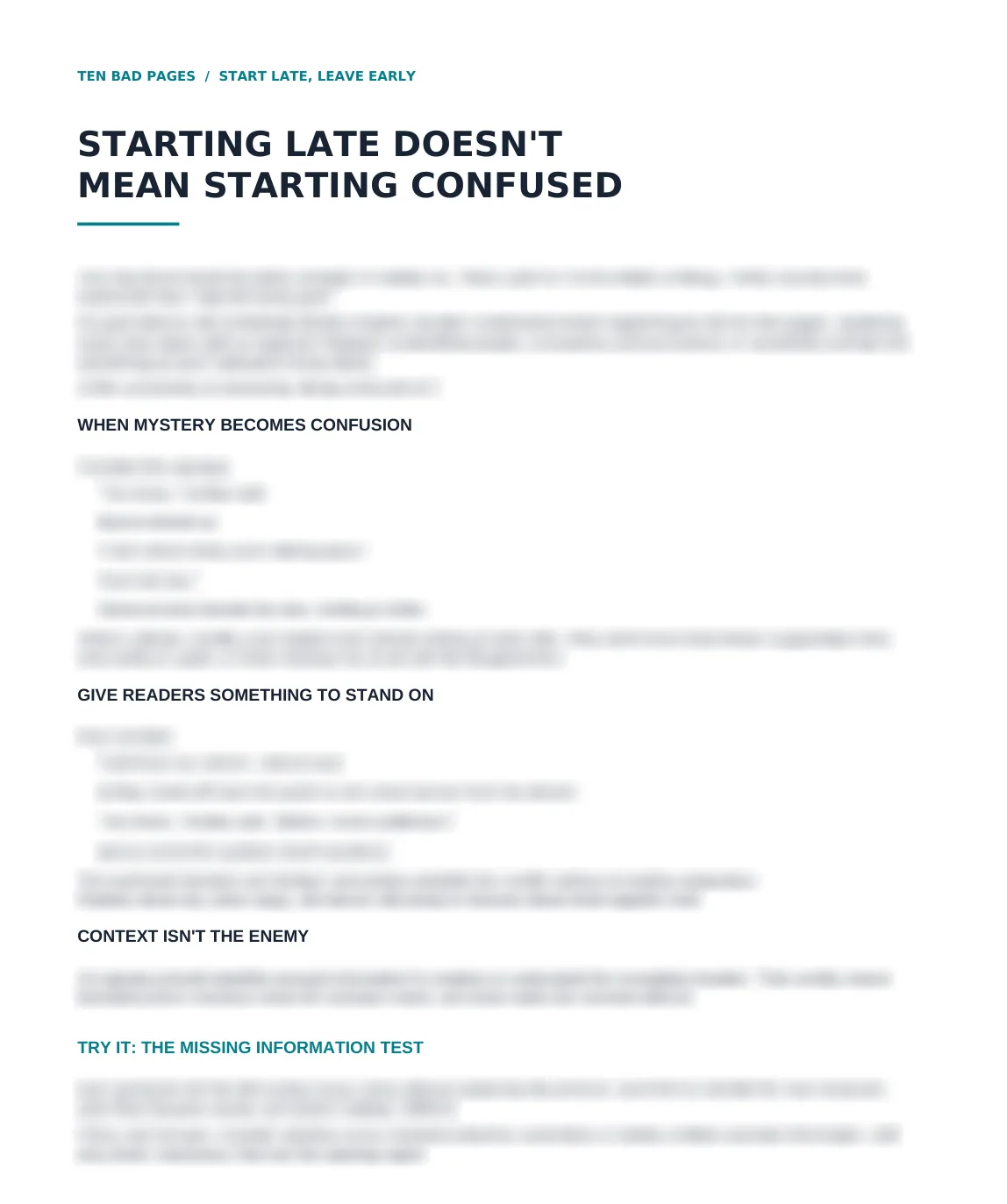
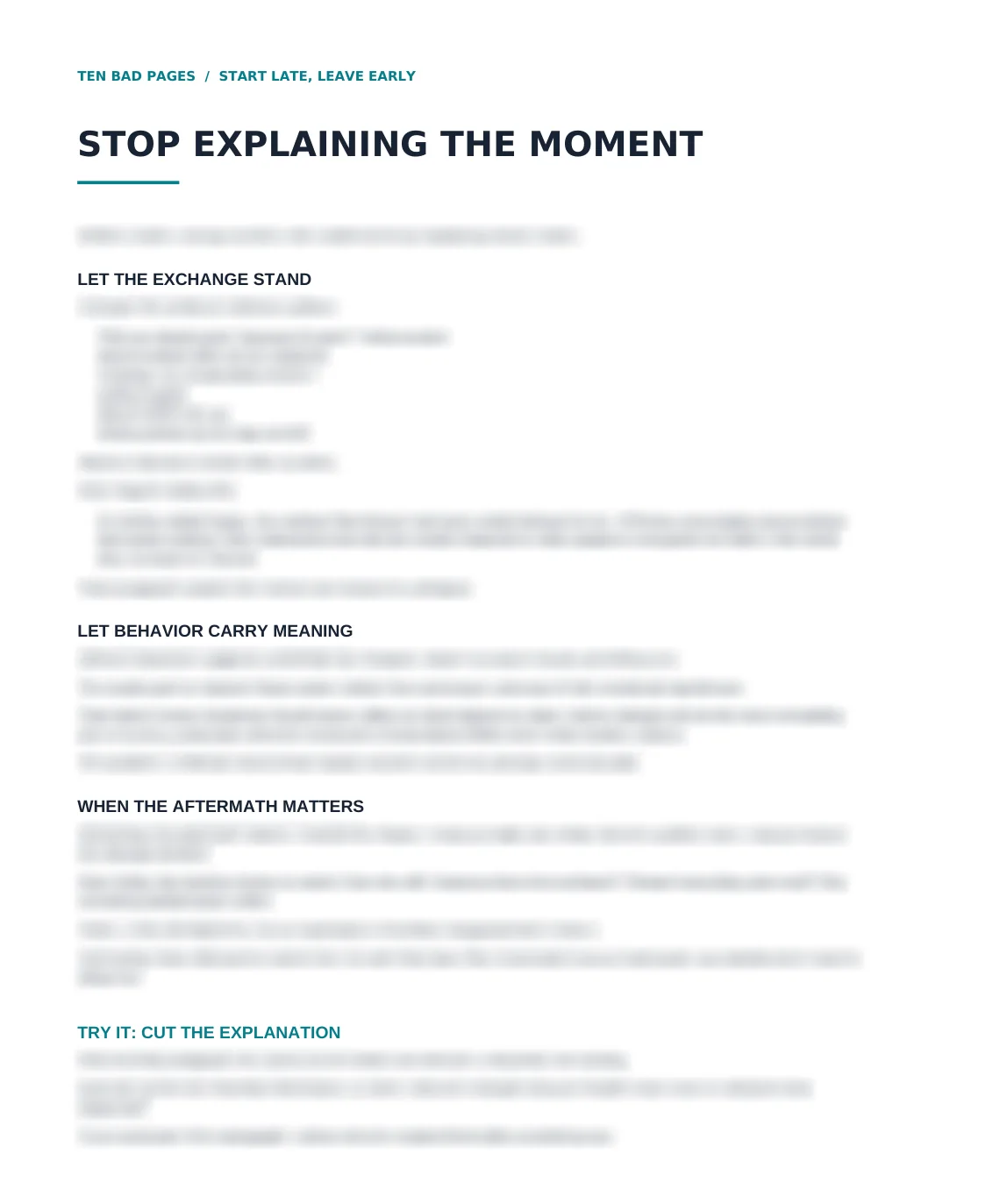
Purchase includes one printable PDF. It’s a guide, not a fillable workbook: the exercises go in your notebook or writing app.
Download right after checkout, and we email you the links too — they work for 30 days. Lose them? Email [email protected] and we'll send more. Not what you expected? Reply to your receipt within 30 days and we'll refund it.