A printable and fillable editing workbook for finding the dialogue that sounds fine but isn’t pulling its weight.
Cut the explanation. Keep the pressure.
Printed to order, coil-bound so the pages lie flat, and shipped free to US
addresses in about two to three weeks. The PDFs come with it: download them
right after checkout. Buying it as a gift? Ship it straight to them. The QR
code on the last page gets them the PDFs too.
Your characters probably talk too much.
They answer questions they should dodge. They explain things everybody in the room already knows. They tell us how they feel, then the prose tells us again just in case we missed it. Sometimes they’re funny for three pages and nothing happens.
None of this necessarily sounds bad. That’s why it survives revision.
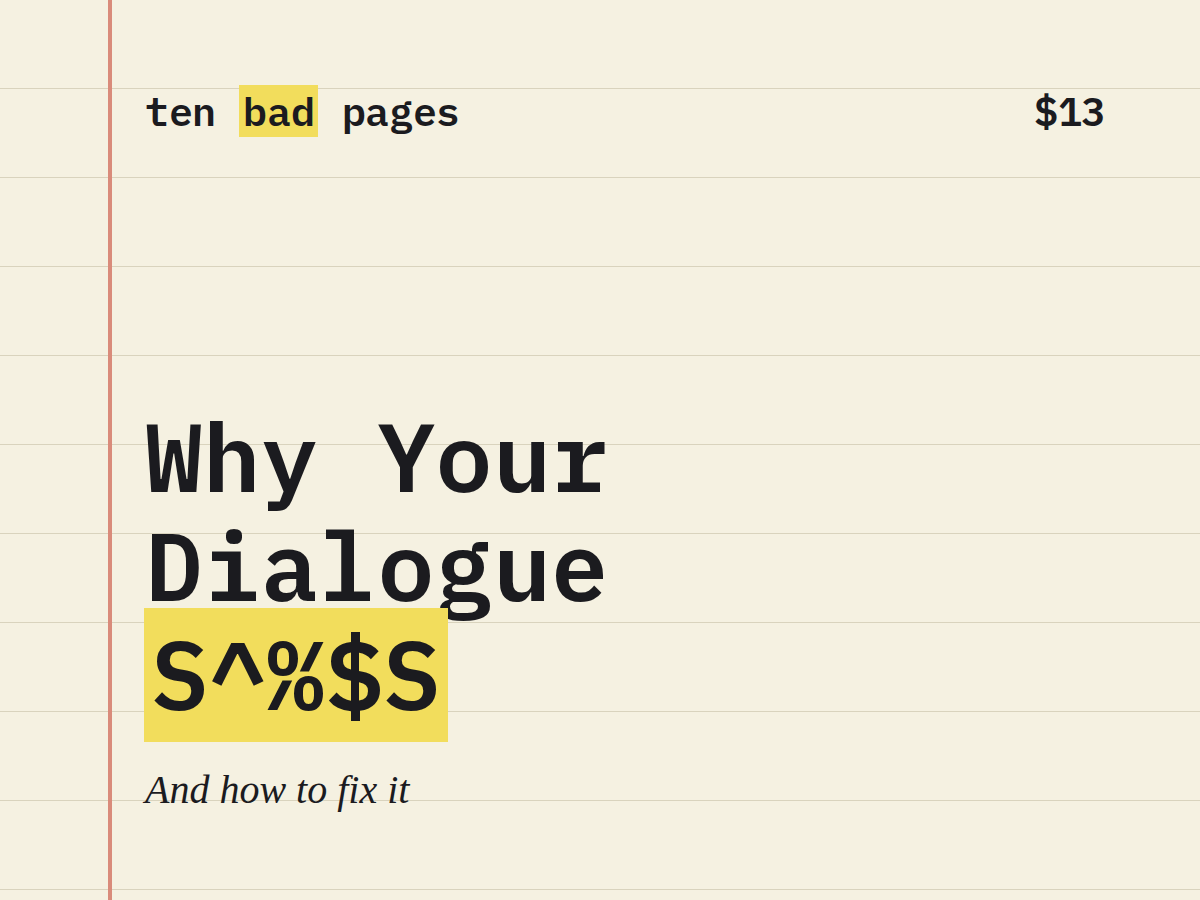
Why Your Dialogue S^%$S is a hands-on editing workbook for finding the dialogue that sounds fine but isn’t pulling its weight.
One of the fastest ways to improve dialogue is to make it shorter, so the workbook starts there: take a dialogue-heavy scene and cut it by 50 percent. Not because short dialogue is automatically better, but because cutting forces you to decide what the scene needs.
What's inside
Start cutting
Cut a dialogue-heavy scene in half, then work through the problems that hide inside conversations.
Printable or fillable
You get both. Keep the pages beside you while you work, or type straight into the exercises, tables and audits.
For the scene that almost works
The characters sound like themselves. There’s conflict. And the scene still drags. You don’t need better banter — you need dialogue that earns its space.
Look inside
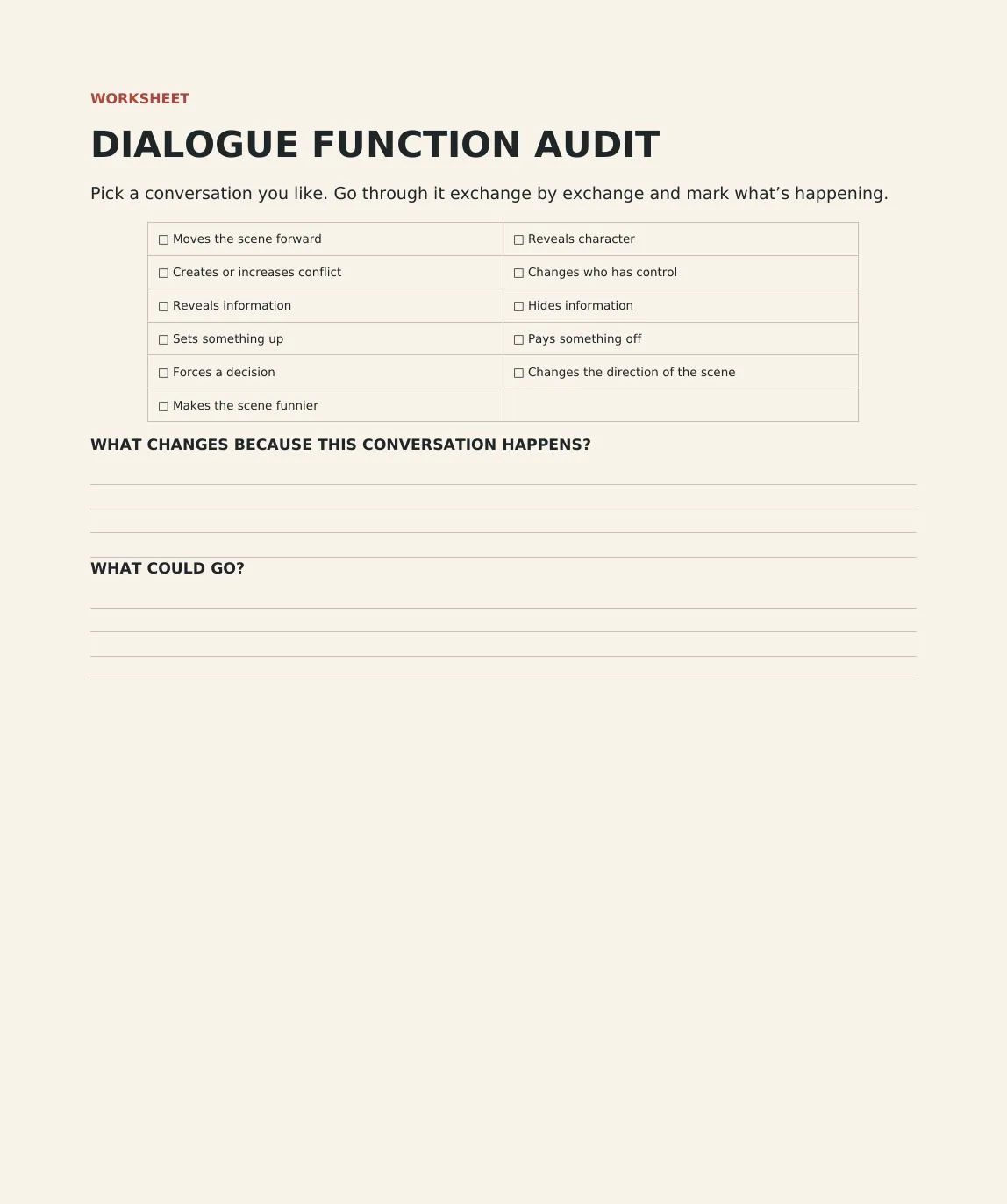
Dialogue Function Audit
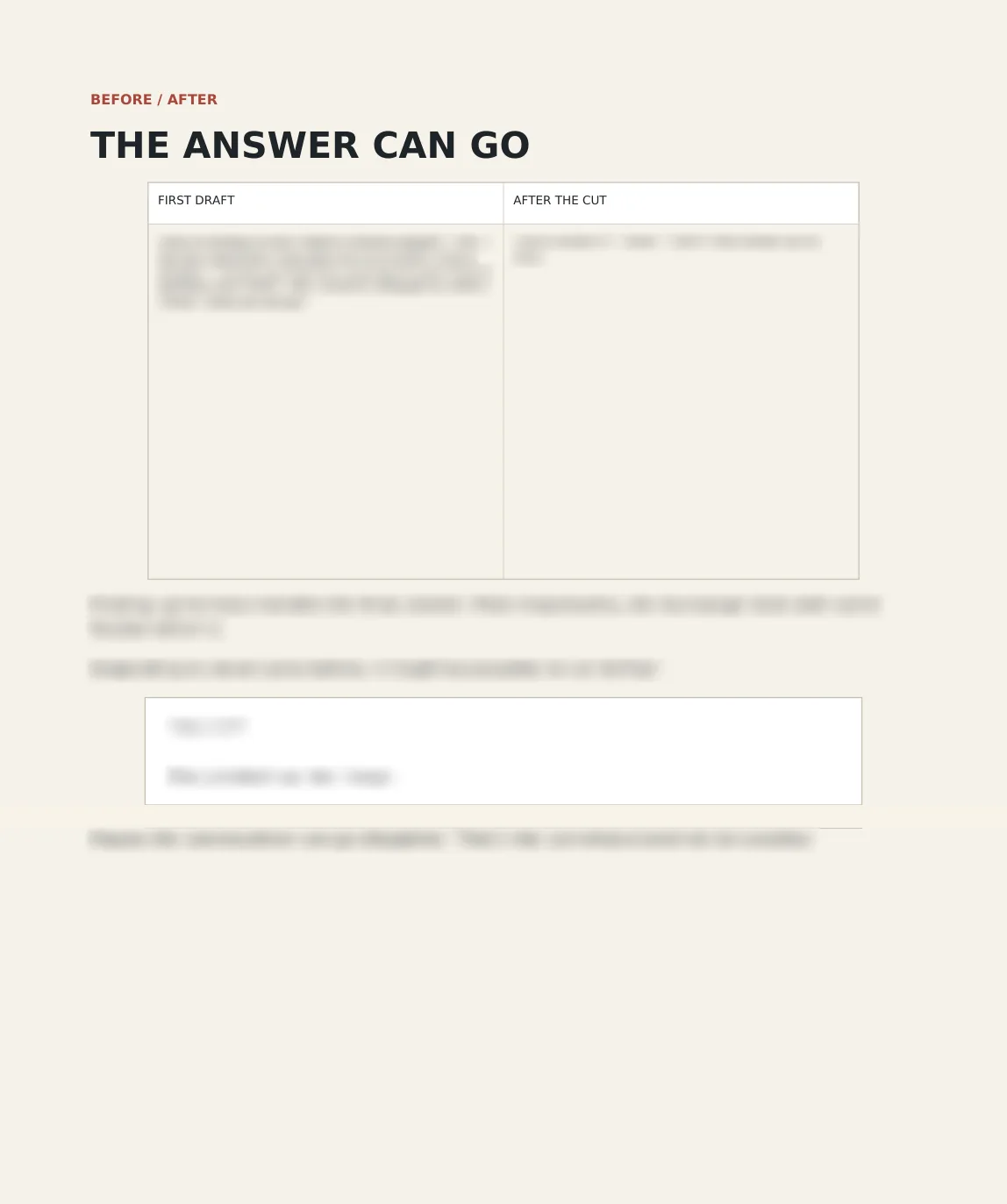
The Answer Can Go
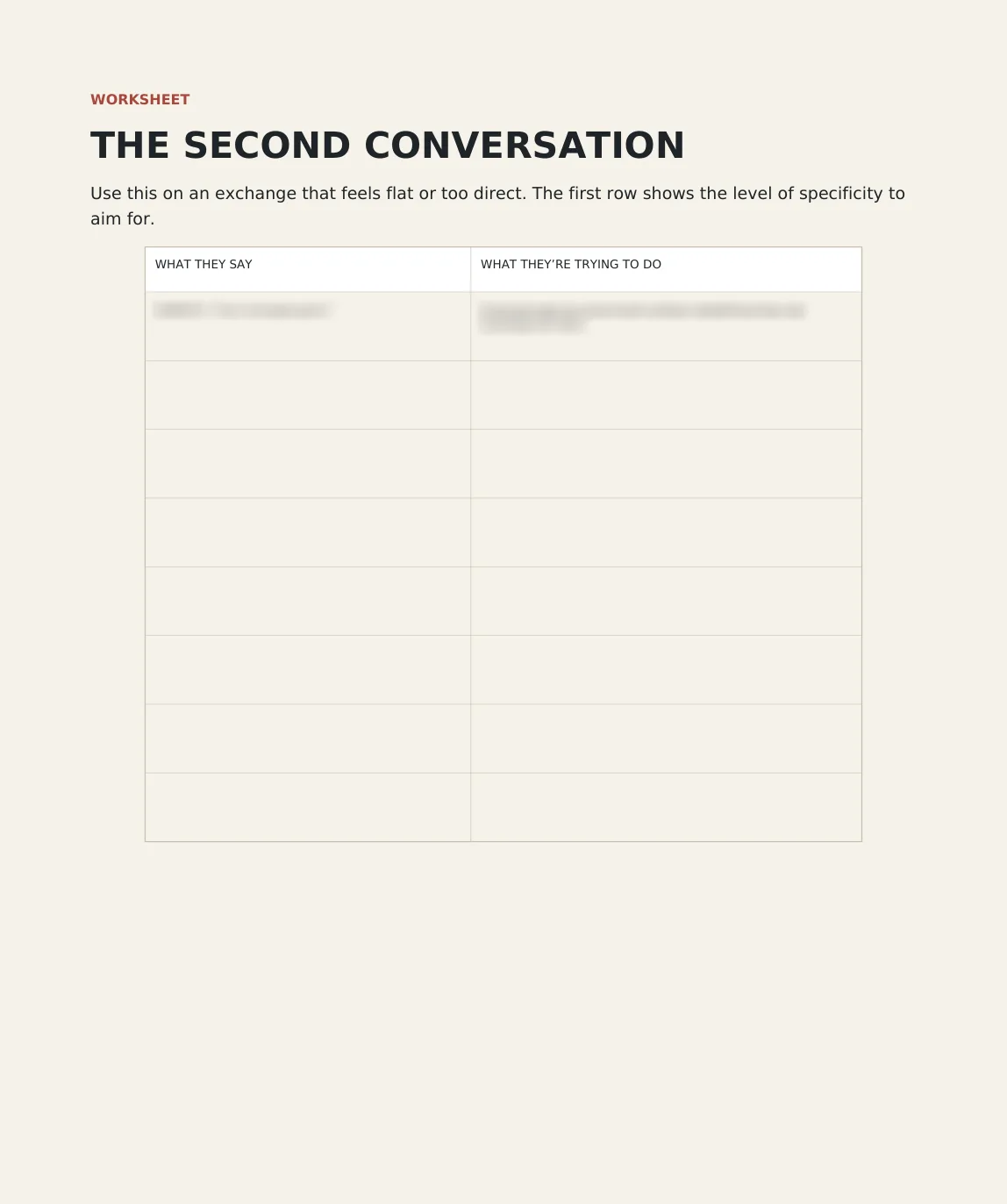
The Second Conversation
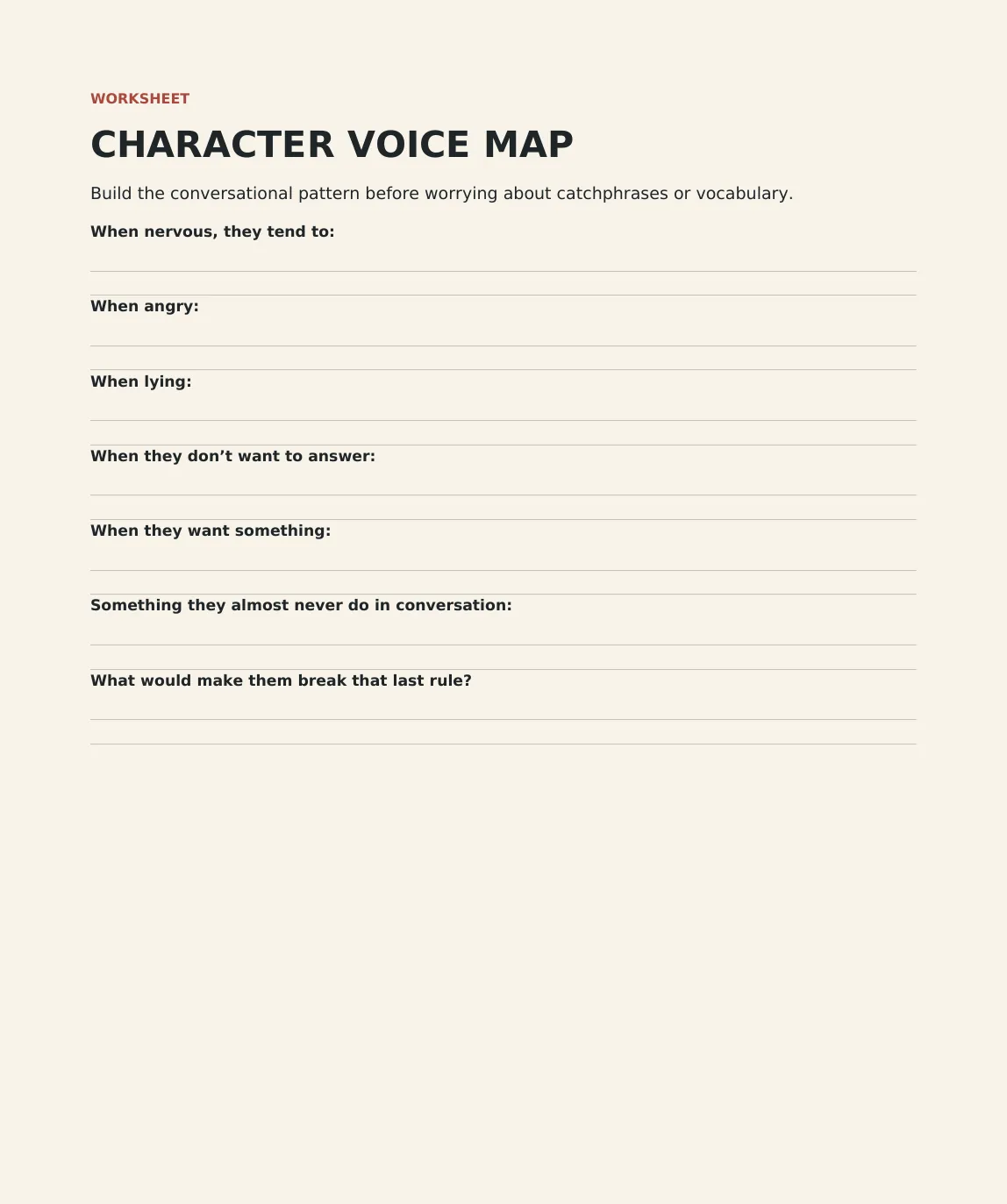
Character Voice Map
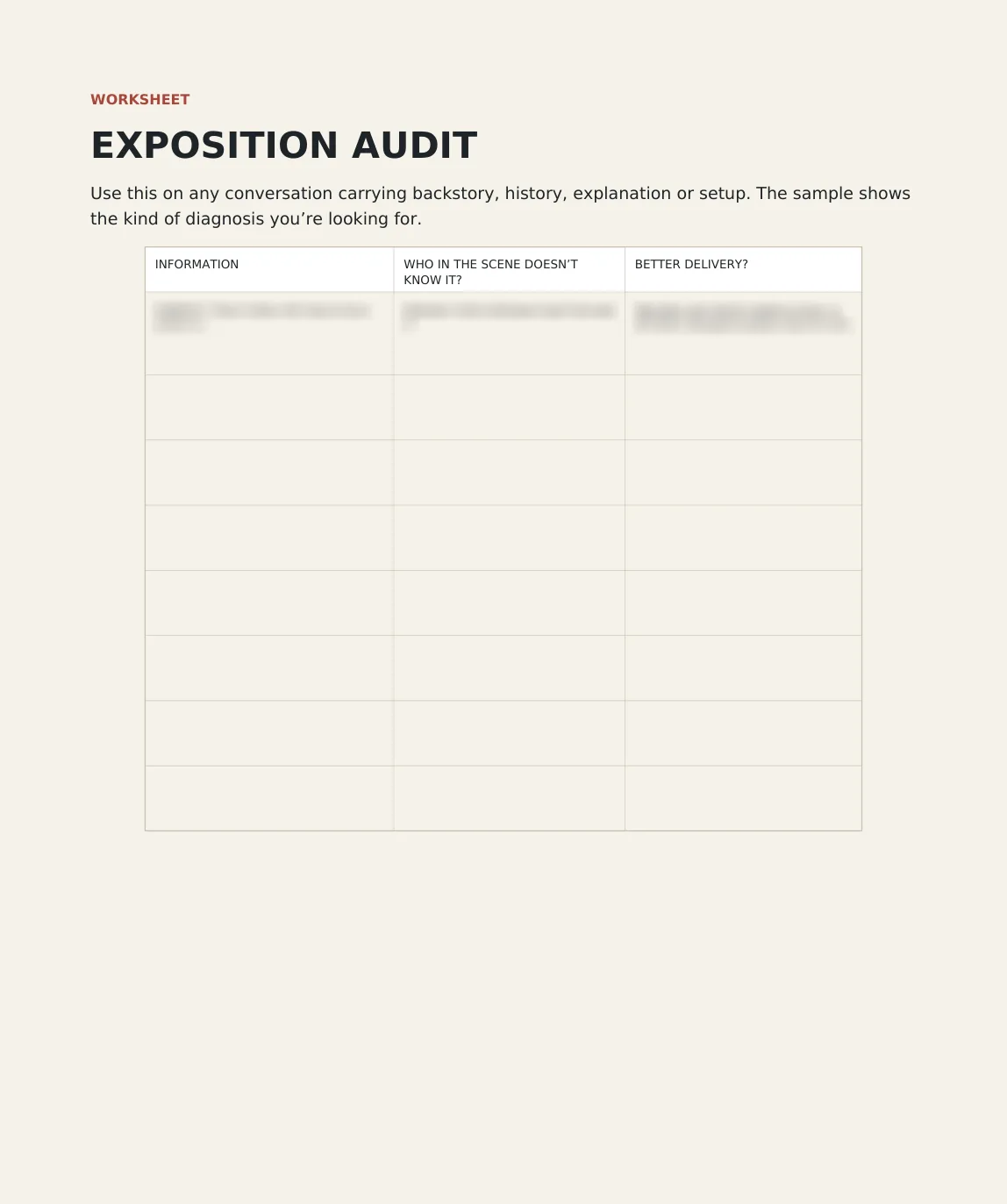
Exposition Audit
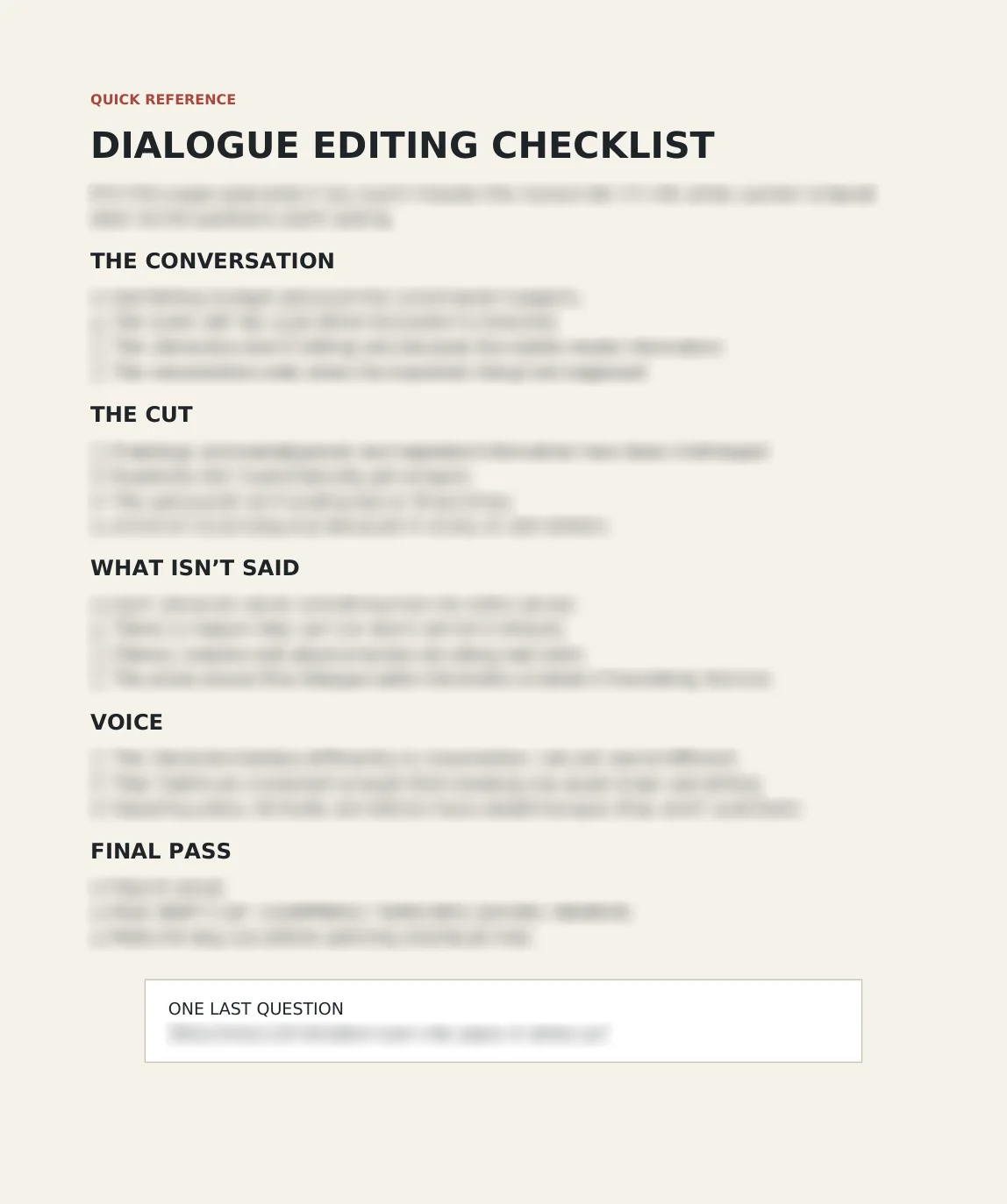
Dialogue Editing Checklist
Inside the workbook
Cut a dialogue-heavy scene by 50 percent
Take away an answer and let a character dodge the question
Track what a character says against what they want from the conversation
Map how each character behaves when nervous, angry, lying or avoiding something
Find information stuffed into dialogue for the reader’s benefit
Strip away the prose and read a scene like a screenplay
Check what comes after the quotation mark
Run the whole thing against ten pages of your manuscript
Dialogue Editing Quick Reference
Printable PDF
Fillable PDF
Purchase includes a printable PDF and a fillable PDF. The printable version is for writers who want the pages next to them while they work; the fillable version lets you type directly into the exercises, tables and audits on a compatible PDF reader.
Printed to order, coil-bound so the pages lie flat, and shipped free to US
addresses in about two to three weeks. The PDFs come with it: download them
right after checkout. Buying it as a gift? Ship it straight to them. The QR
code on the last page gets them the PDFs too.
Download right after checkout, and we email you the links too — they work
for 30 days. Lose them? Email
[email protected] and we'll
send more. Not what you expected? Reply to your receipt within 30 days
and we'll refund it.